
TWAN
Veteran | Iraq
"If I stay connected with my humanity—that's how we stop unnecessary wars."
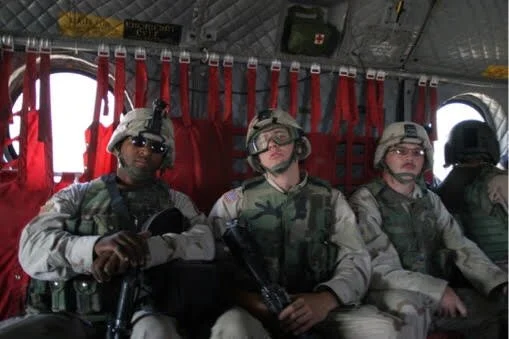
“THE VERY FIRST DAY I ENTERED MOSUL, THERE WERE KIDS RUNNING BEHIND OUR TRUCK GOING ‘AMERICA, GOOD. AMERICA, GOOD.’ One kid did this dance move and was like, 'Hey, Mister, Michael Jackson.' Another kid was doing cartwheels. I was just like, wow. Yes. This is exactly why I'm here. To help people. To help kids like these"
Twan pauses.
"By the end of my deployment, those same kids weren't saying 'America good' anymore. They weren't smiling. They weren't really looking at us. They looked fearful. That's when I knew this wasn't right."
He was 17 on September 11th, 2001. It was the second or third day of his senior year. A few weeks later, he was sitting alone in the lunchroom when a military recruiter sat down.
"I was like, oh, here comes the salesman. I wasn't interested." The recruiter pulled out his attaché case and started showing photos. One caught Twan's eye—a soldier in full battle dress uniform parachuting out of an airplane. "I said to him, 'All right, if you can get me to do that, I would be interested.' And he was like, 'Yeah, I think that's a possibility.'"
Twan was a pretty good basketball player but very skinny. "I was like, I'll get money for college, I'll get a little bit bigger. And no one will ever be able to say shit to me. I'll have served my country. I'll be able to say I earned my spot here." There was something else too. "I was born in Manhattan, and my dad had an office briefly at the World Trade Center when I was very young. So I think it was kind of personal."
He's six foot eight inches tall. In Iraq, that was unusual. "It was like us seeing someone who's seven foot four in the US. Holy cow, human beings get that big. So it was kind of a great icebreaker for me."
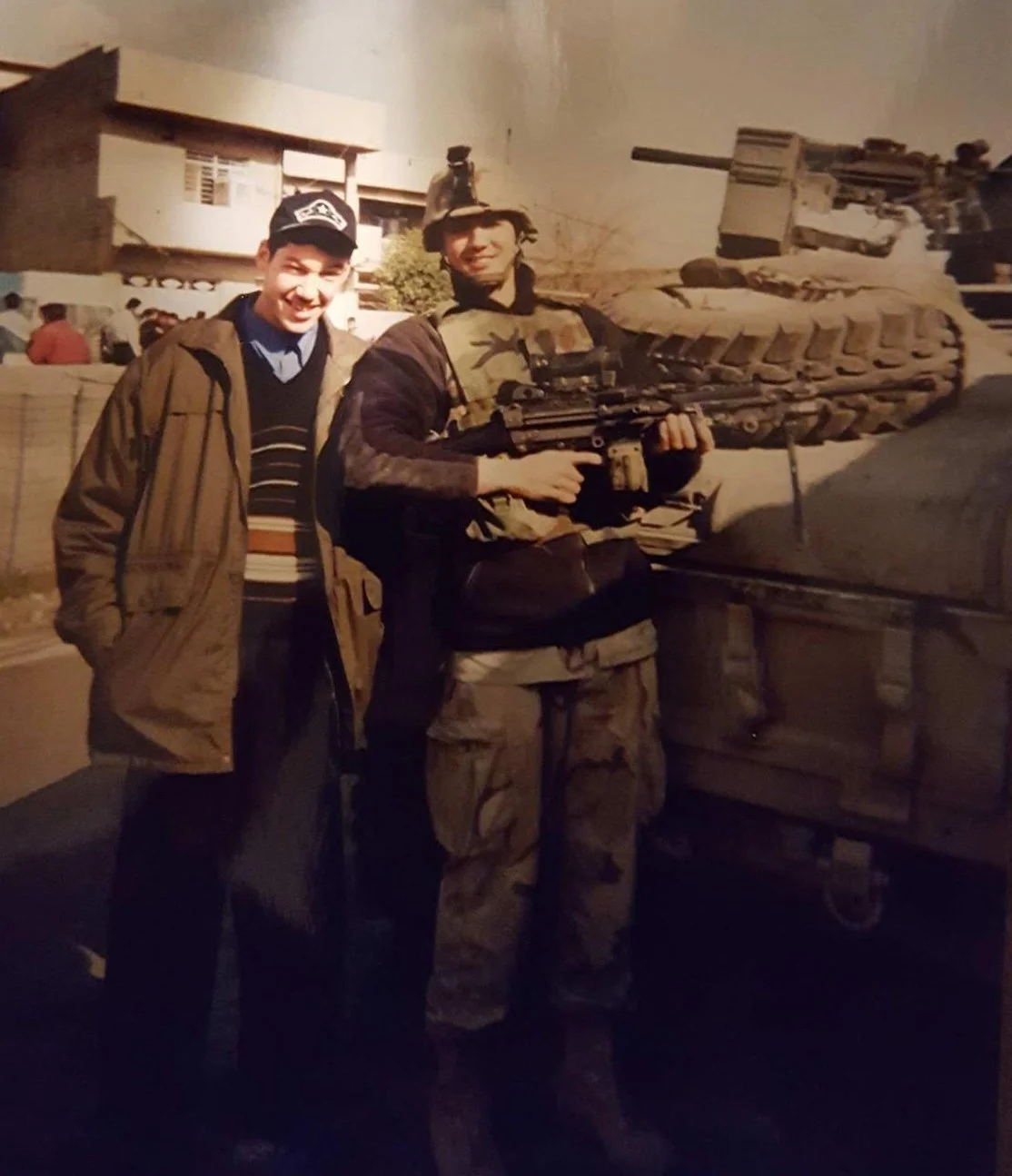
One of his favorite photos from his deployment is him standing with two Iraqi men. "One of them was known as the tallest guy in Mosul—he was like six foot or something. They were like, we gotta get a picture of you guys together."
Twan with the tallest man in Mosul
"I was in a Humvee unit, so we were zipping all over the city. A lot of it was escort—we'd take a colonel or captain to whatever meeting, and then we'd just have an hour or two to hang out. There was a barber shop and other stuff. We just hung out for a couple hours."
He stops. "I can't remember a bad interaction with an Iraqi person personally."
But he remembers the actions of the 50 Cal gunner in his unit. "A 50 Cal is this gigantic machine gun that shoots a massive bullet with a four-foot barrel. It's all black and it just looks like death being pointed around. And he was pointing that at kids to get them to back up. They were just excited to see us""
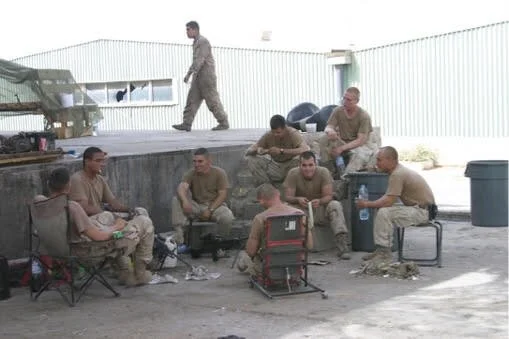
Twan didn't know what to think. "I had heard stories of women with babies showing up at places, and the baby was actually explosives. You couldn't trust anything. So I sort of understood why this guy was doing what he was doing, and at the same time, there was just something wrong about it. I didn't know how to reconcile those two realities."
As time went on, he saw how they were treating people. "It just didn't seem necessary to be so domineering. You know the drunk dad in movies who comes home and treats the kids really dismissively? That's kind of how a lot of us treated people over there. It only takes a few. There was enough."
He started guarding oil pipelines. "This dim awareness started to creep in. The actions I was being asked to take weren't lining up with what I was told was the reason I'm here. And I started to see—we're not actually the good guys, are we?"
"I was there in 2003, part of the very first group in Mosul. Later on, in 2007, '8, '9, '10, we start having ISIS. Those were the young kids we treated like dirt, who were now turning 17, 18—just the way I turned 17, 18. Their whole country's in shambles. What are they going to do? They're going to blame the people who showed up and tore their country apart."
Something else stuck with him. "I remember looking at these people and going, wait a minute—they're happy. They look happier than the people I know back home. How is that fucking possible? They have nothing. There's just dirt. There's not even a tree."
Then it dawned on him. "They have each other. And that's what we've lost in the States. There's cousins and uncles and grandmas and grandpas and nieces—they were all there, constantly circulating around. I was like, I'm not supposed to want to be like you. You're supposed to want to be like me. And I wanted to have more of their life. More family around me."
His voice drops. "That made me really sad."
Coming home was harder than being there.
"I was no longer proud of the country, and everyone kept telling me how proud they were that I served. I had to force a smile because I didn't know how to have that conversation."
"I was so angry at people I loved deeply—people who drove big cars and had big houses. I was like, don't you see? All the oil these things take is what led to boys like me being brutalized, and so many innocent people in Iraq being brutalized. And you're just sitting here talking about how you can't wait to get a bigger car."
For years, Twan tried to forget his military experience and assimilate back into the regular world. "That didn't really work, because what I had seen had so changed my perspective."
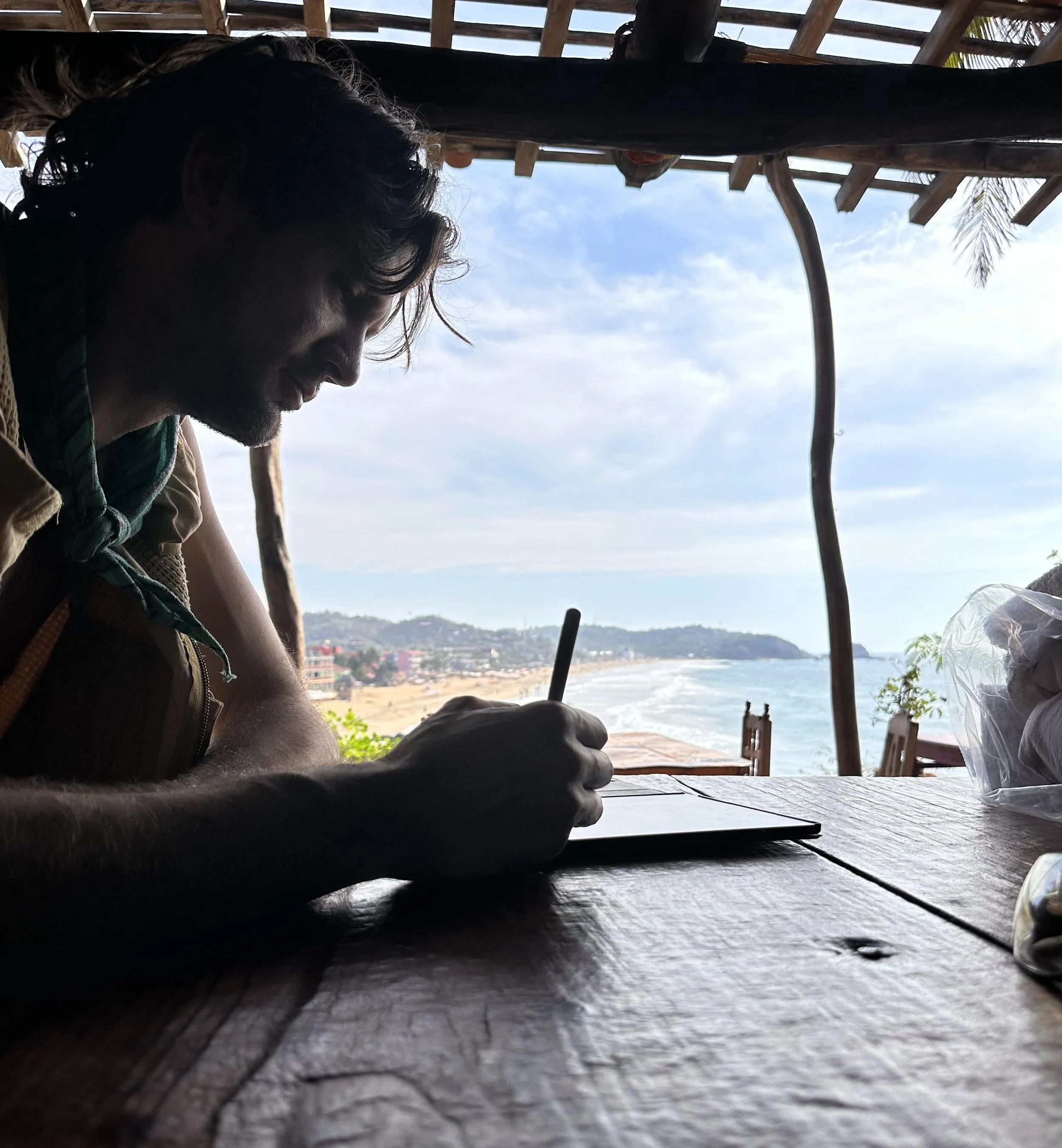
He signed up for a 10-day meditation course. "It was totally silent the whole time. Eight hours a day, every day, they were teaching me how to feel my body—head to toe and back down again, continuously. Soles of my feet, my toes, my ankles, my shins, up to the top of my head."
"I had basically gone numb to my body while I was in Iraq. This meditation practice gave me a way back to my own source of truth. Not mental right or wrong up here, but what's true according to my body."
Years later, he tried his first Veteran Rites ceremony—four days in nature with water, a tarp, and a sleeping bag, but no food. "That was kind of the capstone. I experienced my first real moments of adult wholeness."
"If I could say something to someone who was displaced by the Iraq War, I would say: I feel a lot of grief when I imagine what you've been through. How can I help? And then I would just listen. Really listen. Drop the agenda, drop the secret motive. Just be an open vessel of receptivity."
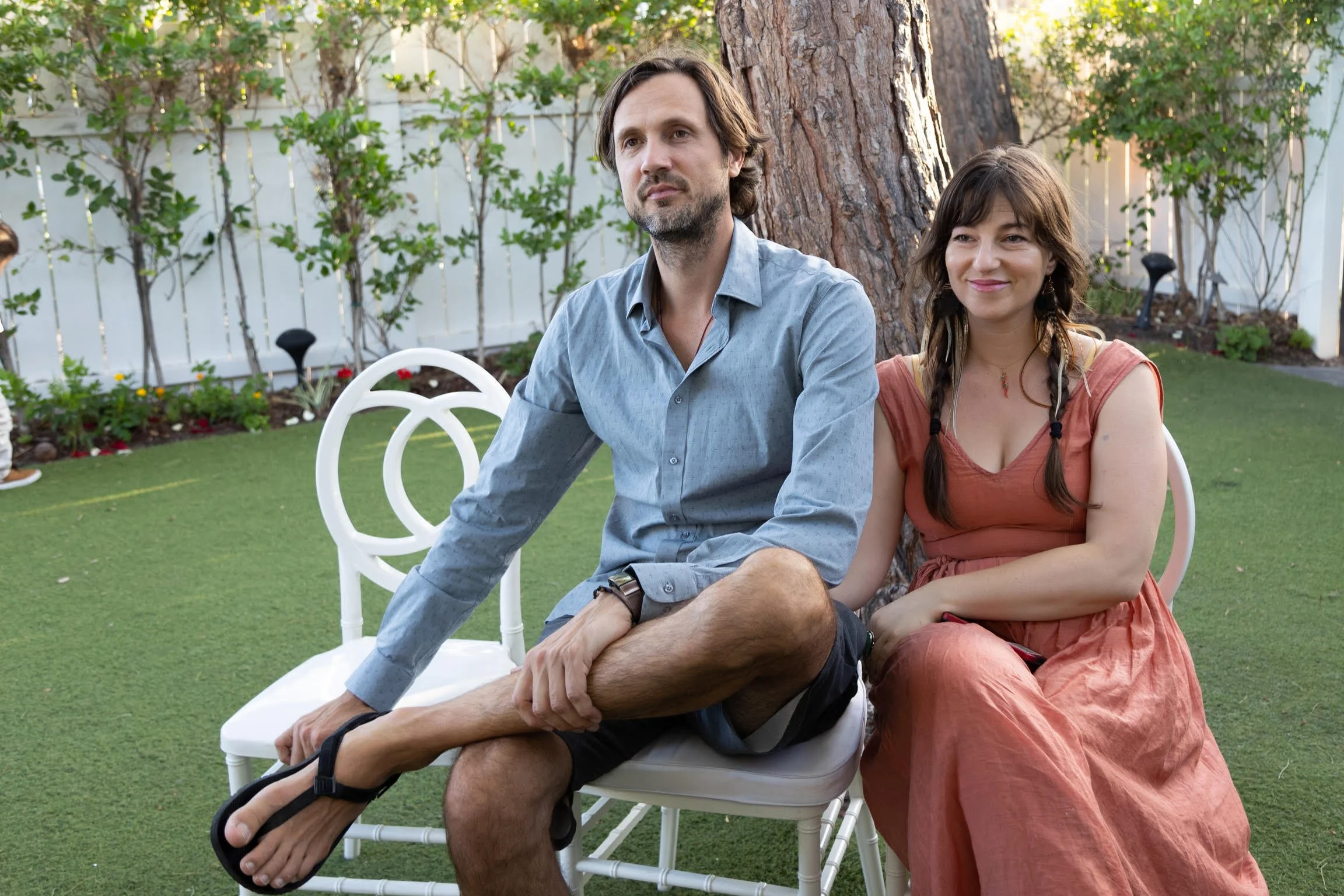
"The single most important skill a human being can have—especially a soldier, but any human being—is the ability to have control over where my attention goes and for how long," Twan says. "The second most important thing is the ability to know what's true for me, apart from what my parents want, my culture wants, my country wants. Because I've found attention is only effective when it’s aimed at what’s actually mine to live."
"I knew at a certain point what I was doing was wrong in Iraq. I didn't know how to explore what that was all about or communicate it to anyone else. So I ended up continuing to be a part of something that was deeply damaging to me morally."
He believes the wars start from within. "They start with me disconnecting from my own heart, my own truth. That's what allows the wars to happen."
"If I stay connected with my humanity—that's how we stop unnecessary wars."