
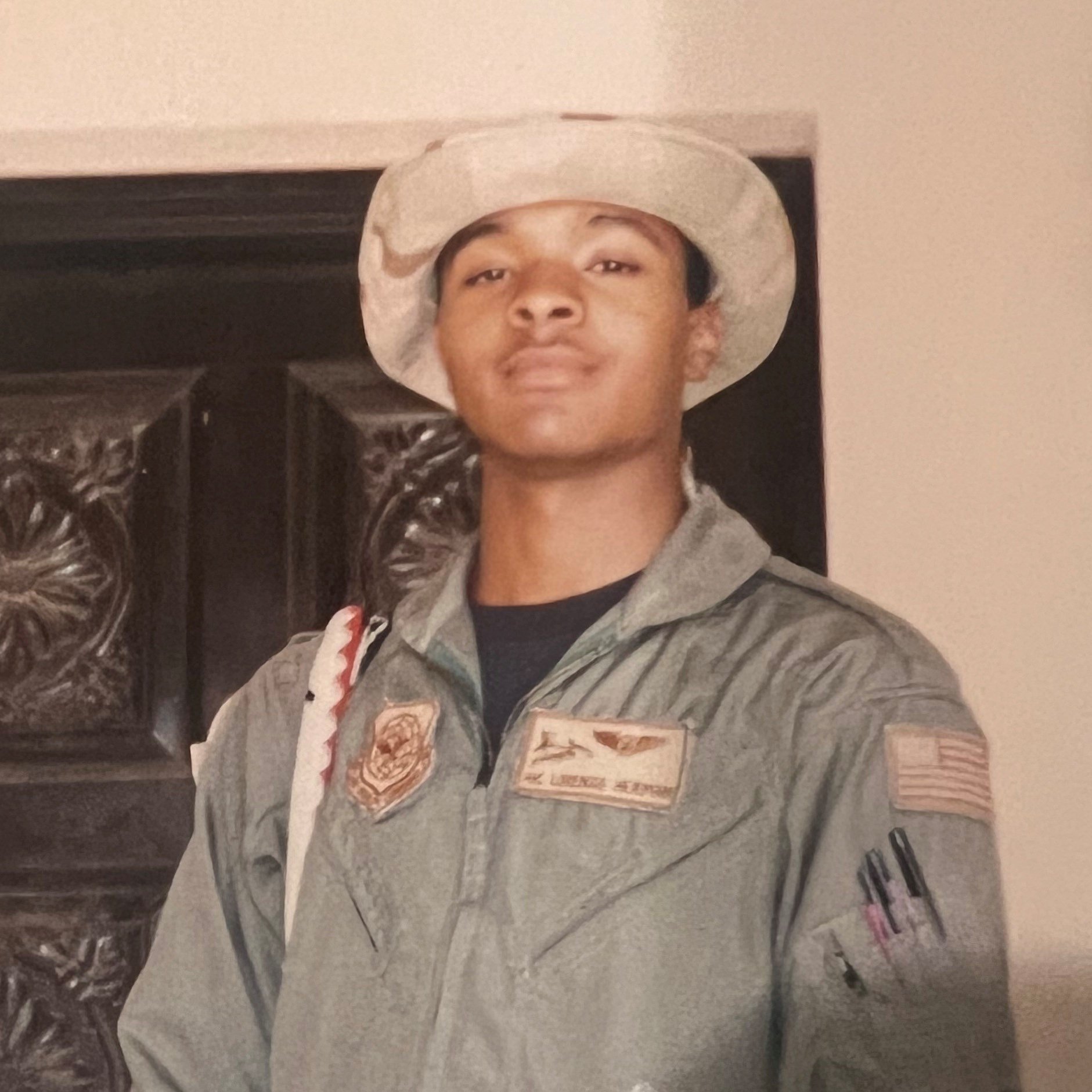
LORENZO
Veteran | Saudi Arabia
"Light always shimmers in darkness. Sometimes you can't see it — but it's always there."
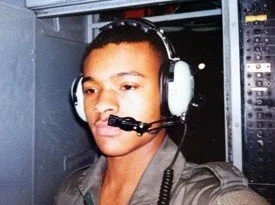
IT WAS 1994. LORENZO WAS AN UNDERGRADUATE WITH PLANS TO EARN A PHD AND BECOME A PROFESSOR. Then tuition payments stopped. His parents' messy divorce left him financially stranded, making him feel like a burden to them. With nowhere else to turn, he enlisted.
"Poverty is why we go," he says, "but no one will say it out loud. There's a lot of shame around being poor." Out of anger, he didn't tell his parents what he'd done. His mother thought he was missing for four weeks.
Lorenzo entered the military under "Don't Ask, Don't Tell" — gay, closeted, and watching a recruiting officer scratch out the sexuality questions with a heavy black pen because the forms hadn't yet been updated. What he couldn't know then was how much that silence would cost him.
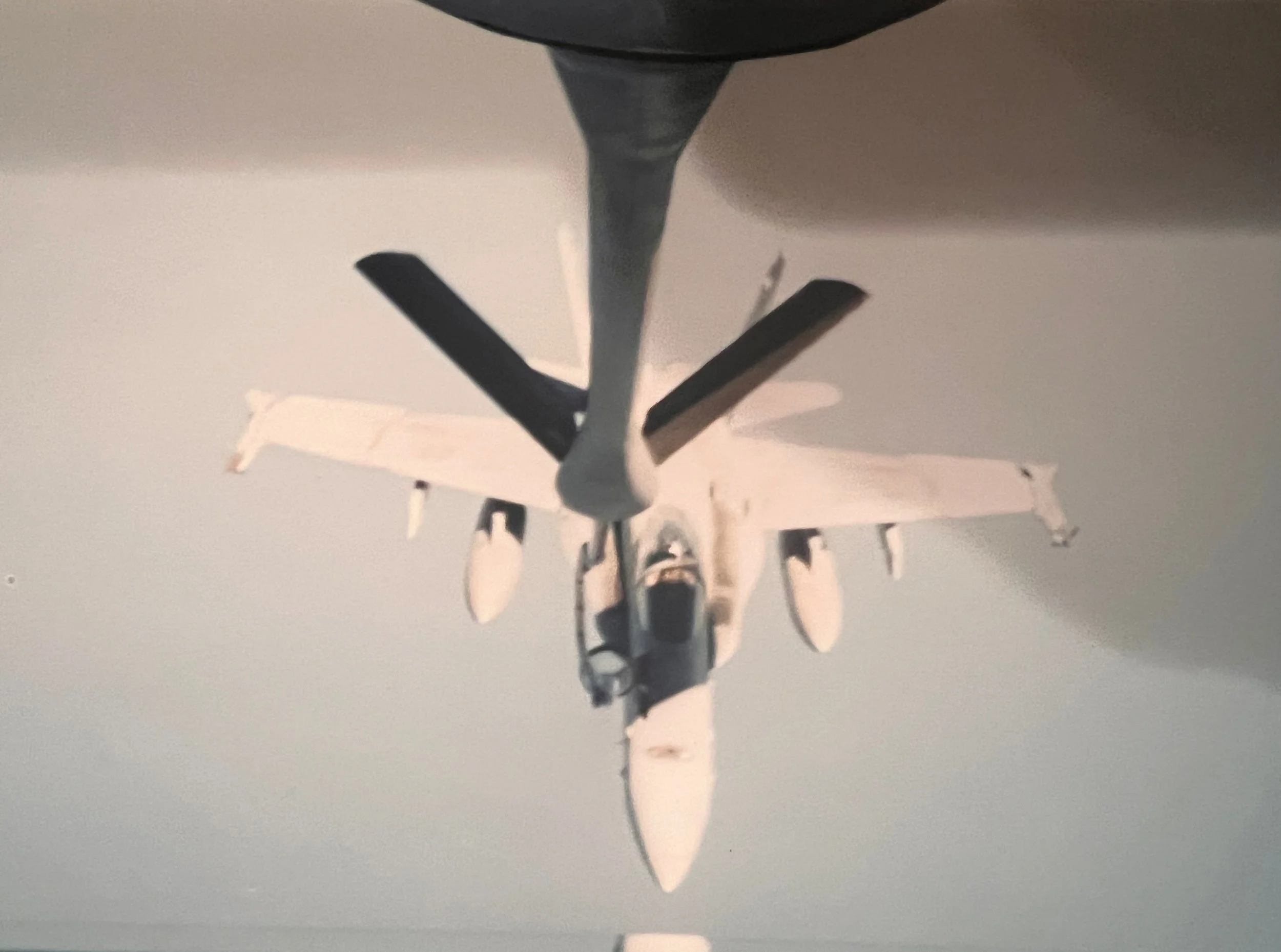
During Operation Desert Storm and the post–Gulf War Ceasefire Campaign, he was stationed in Saudi Arabia, where he witnessed a public beheading. He refueled planes that left loaded with bombs and returned empty. "I had been conditioned to believe it wasn't really war," he says. "I had disassociated what the bombs were for." When Khobar Towers was bombed in 1996, he had stayed there many times and knew people who were injured. That could have been me. That could have been me.
Then he was sexually assaulted by a male civilian. He couldn't report it. Under Don't Ask, Don't Tell, sex between two men was assumed to be consensual — assumed to be proof of homosexuality. To speak about the assault was to out himself. So he said nothing.
Lorenzo went AWOL.
When he returned, his first sergeant and commander stood across from him. "I was raped," he said — and passed out. He woke in the psych ward, was put on medication, given a desk job, and handed a cover story he didn't write. "It was a complete lie," he says. "And I just went along with it."
It was theater that broke the silence.

The base psychiatrist urged him to audition for a production. Lorenzo got the part in a played called "I Got Ya. About a year later, he portrayed a trans woman named Miss Raj in The Colour Museum — and invited the entire base. "I'm thinking they're going to think I'm really gay now," he says, "but I didn't care." The people who thought they knew him didn't recognize him on that stage and said what an incredible job he did.
For the last four years of his six years on active duty, Lorenzo performed and stage-managed. He co-wrote and starred in a play to raise funds for HIV/AIDS. "Theater saved my life," he says simply.

After the military, he became an activist — for LGBTQ+ rights, for HIV/AIDS care, for the friends he'd already lost to the disease. He organized in Spokane, founded a nonprofit in San Diego, advocated in statehouses and in Washington. He sat with people dying of AIDS and organized their memorials when they were gone.
He married his husband, an Air Force veteran. In 2022, he finally received his doctorate.
That same year, a chief pilot reached out. He wanted help getting Afghan refugee pilots — men trained by the U.S. military, now forced to flee the Taliban — through FAA commercial certification. No flight school would take them. So Lorenzo and his husband built one. Today, theirs remains the only program in the country whose students are almost entirely former Afghan Air Force pilots.
"They're our family," Lorenzo says.
His husband reminds him sometimes: if you never went into the military, you wouldn't have met these people. You wouldn't have done any of this. Lorenzo doesn't disagree. But he doesn't let that erase what came before it.
"My 20-year-old self still is hurt," he says, "and he still wants to be remembered. Because what I went through was valid."
When asked what holds through all of it, he doesn't reach for a clean ending.
"Light always shimmers in darkness," he says. "Sometimes you can't see it — but it's always there."