
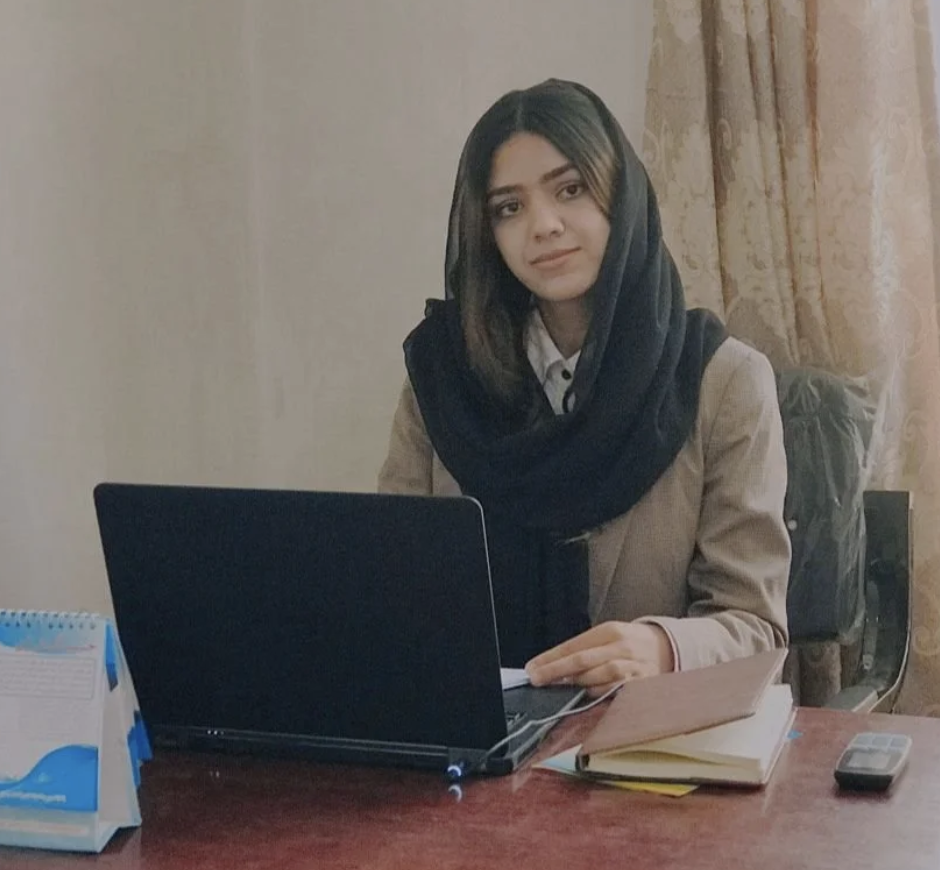
FARKHUNDA
Kabul, Afghanistan | California, USA
“I wan’t to be their voice. For the girls who sit at home dreaming to study – but can’t.
FARKHUNDA WAS BORN INTO A FAMILY THAT VALUED POETRY, LITERATURE, SHORT STORIES, AND TRADITION. Her home was filled with books, and the quiet devotion of parents who believed deeply in education for all. Growing up in that world shaped her love for words and storytelling, a love that became both her compass and her refuge.
In Kabul, where many girls were told school was not for them, Farkhunda’s parents insisted that education was her birthright.
Neighbors questioned why a girl needed to learn the English language or study at all. Her parents didn’t waver. They made sure every daughter went to school – no matter what anyone thought.
Within that atmosphere of encouragement, her creativity blossomed. By high school, she was writing short stories and prose poetry in Dari, one of which was published in a magazine. She soon found herself reciting Afghan poetry at school seminars, discovering her ability to connect with others through expressive language.
After graduating, she passed the Kankor, one of Afghanistan’s most competitive exams, and earned a place in the English Language and Literature faculty at Kabul University.
As one of the top students in her cohort, she not only immersed herself in literature but volunteered to teach English to students from other faculties. It was her way of honoring what her family had given her: a belief in education as a path of dignity and possibility.
But Farkhunda’s life wasn’t merely academic. With the same courage she learned at home, she joined the first Afghan Women’s Cricket Team, a bold choice in a society where women in sports faced criticism and danger. “It was more than a game,” she says. “It was proof that Afghan women deserve opportunities.”

Later, as the head of a women’s empowerment project at Good Neighbors International, she worked with female Afghan tailors to support their families.
Then came the day that changed everything.
On the morning the Taliban entered Kabul, she was at work. “We heard gunfire,” she remembers. “The main office told us to take only the important documents and leave.”
The streets were chaos, people running, shouting, desperate to find safety. Her family called her more than forty times before she reached home. Kabul had fallen. Her work had become dangerous overnight. Her family burned paperwork linking them to foreign organizations.
“I tried not to cry,” she says. “But tears came anyway.”
Ten days later, they fled toward the airport. “It was thousands of people jumping on each other,” she says. “Our car was shot by a bullet. I don’t know how we survived.”
They boarded a U.S. military plane and began the long journey through Bahrain, to Washington, D.C., Texas, and eventually to California, where her older siblings were waiting.
Farkhunda’s family arrived with almost nothing. “Only a backpack, one or two clothes,” she says.
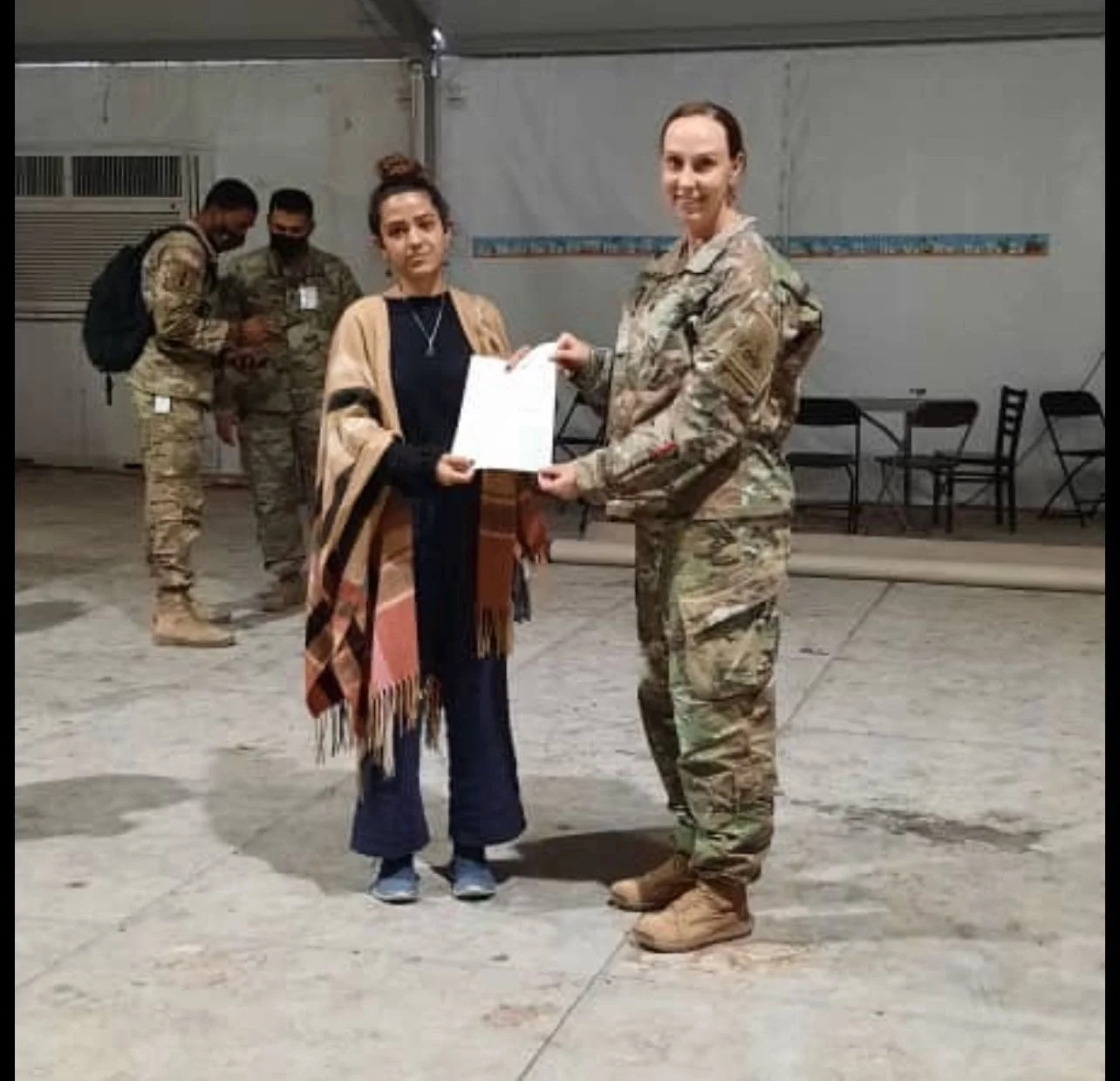
In the Texas refugee camp, she returned to the thing she always knew: teaching. She volunteered as an English instructor, helping fellow Afghans navigate the unfamiliar systems of their new lives. It grounded her. It gave her purpose again.
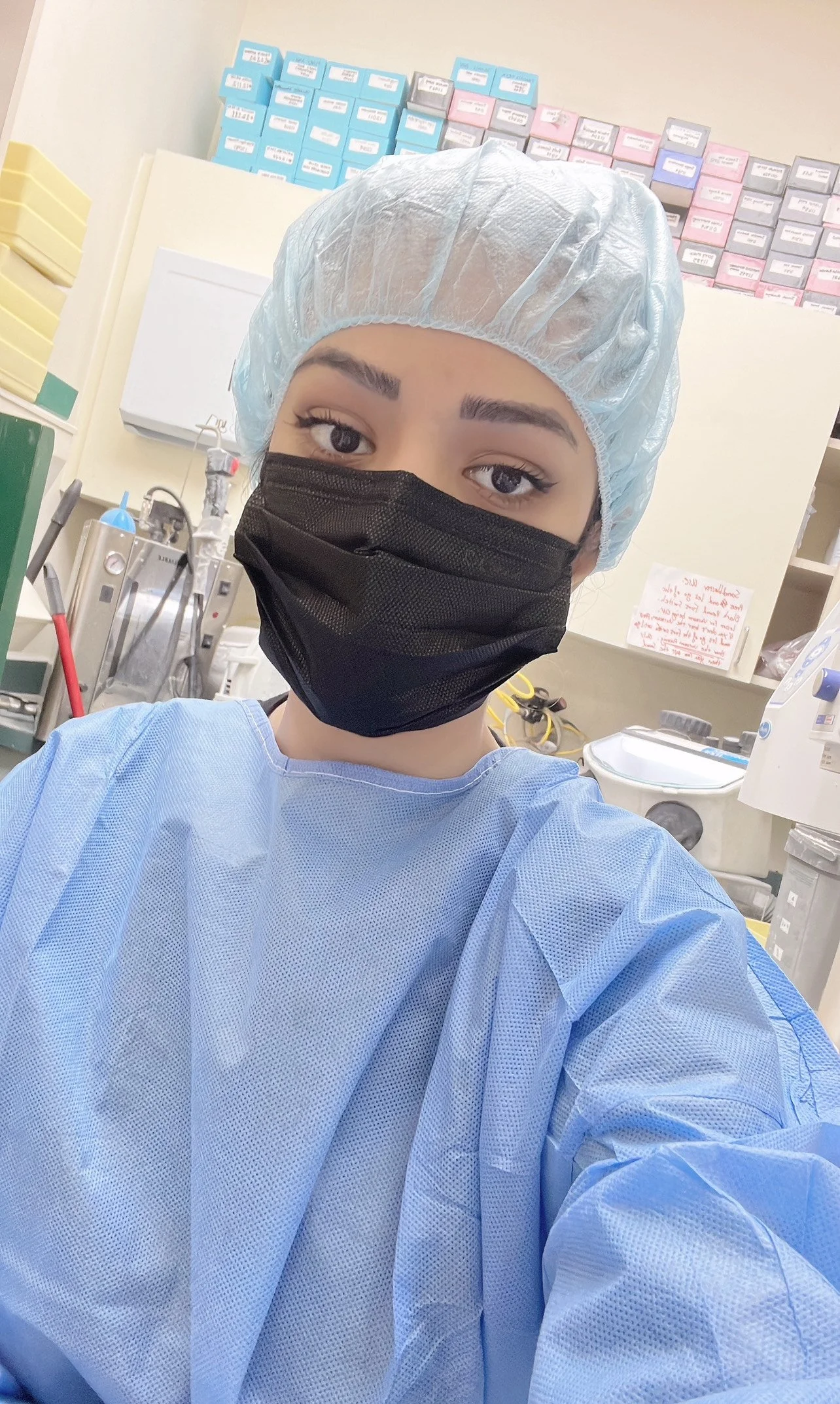
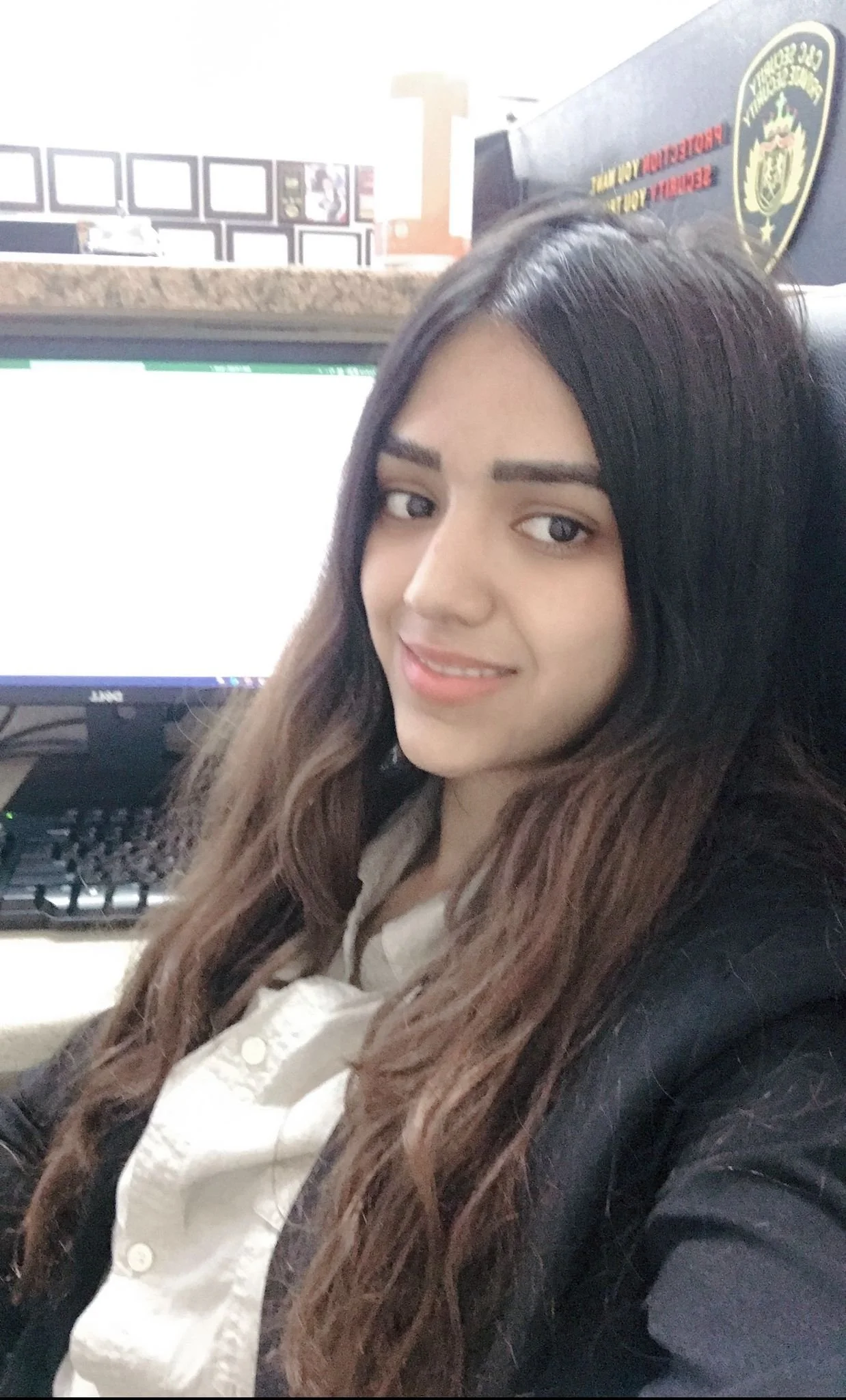
In California, she rebuilt piece by piece — becoming a registered dental assistant (RDA), enrolling in college. She carries the weight of grief too: her mother died during COVID, a loss she holds gently.
Even through her sorrow, Farkhunda radiates grounded hope.
When asked what she would say to American soldiers who served in Afghanistan, she pauses. “Thank you,” she says. “They were kind. They wanted to help our people. I could see it in their faces — that sympathy for Afghans.”
And to Americans who have never met a refugee, Farkhunda says, “We come from different cultures. We may speak differently or act differently, but we are learning.”
Today, Farkhunda stands with the quiet certainty of someone shaped by both hardship and hope. She is still the girl who loved words, who valued learning, who refused to let fear decide her future. Her journey didn’t end when she left Kabul, it transformed her into the woman she is now: resilient, focused, and determined to use her voice for others.