
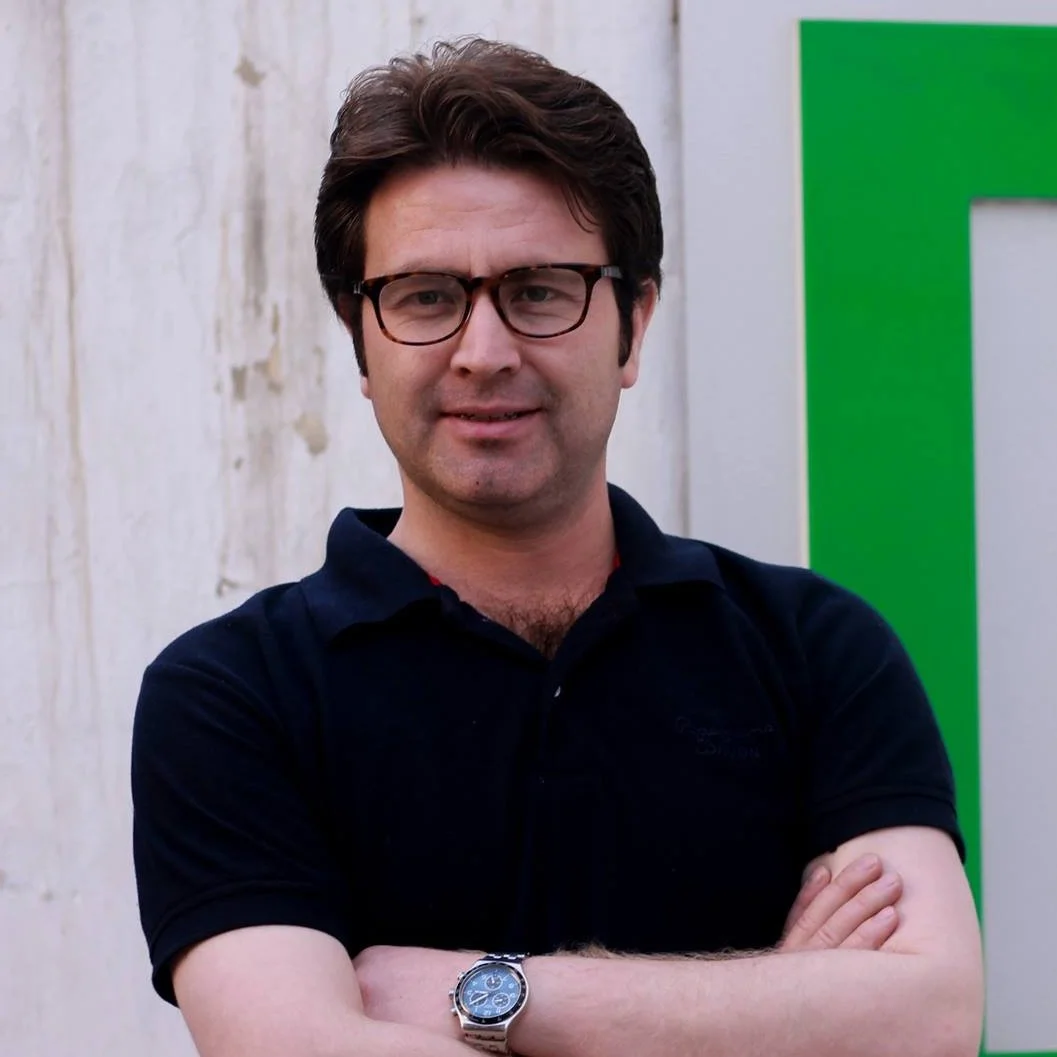
TAREQ
Afghanistan
“We lost everything, but we haven't lost our humanity or our desire to contribute.”
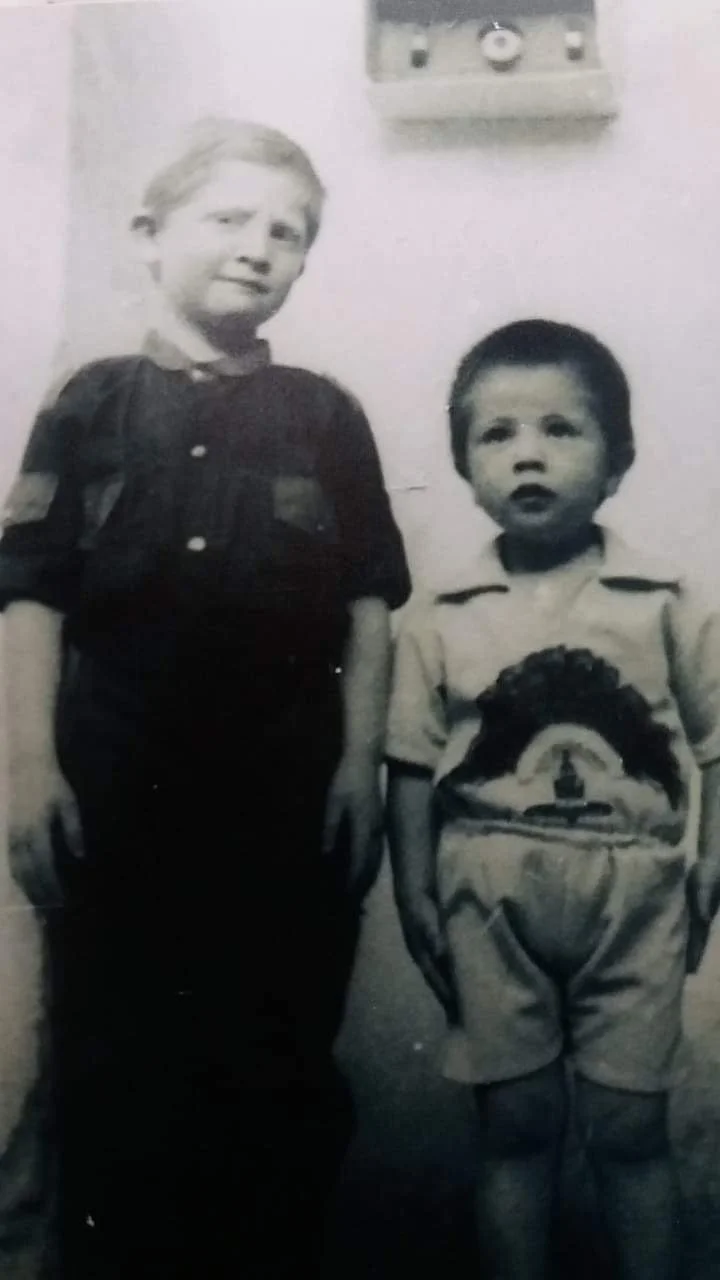
Tareq standing beside his uncle in his grandfather’s house in Mazar City.
TAREQ EQTEDARY WAS BORN IN MAZAR-E-SHARIF, IN AFGHANISTAN’S NORTHERN BALKH PROVINCE, a region layered with thousands of years of history, culture, trade routes, and centuries of ancient civilizations, and the province associated with the birthplace of Mawlana Jalaluddin Mohammad Balkhi, known as Rumi." But Tareq's life began with tragedy.
"My first breath was my mother's last breath on this planet," he says quietly. "She had already lost two babies before me. So my existence came at the cost of losing her."
Tareq was raised by his grandmother and guided by his grandfather, who was deeply committed to education and culture. Their home was not wealthy, but it was rich in spirituality, faith, values, learning, respect, community, and responsibility. His grandfather had a profound impact and inspired him deeply.
Even as a child, Tareq showed signs of independence, curiosity, and initiative. When he was 11 or 12 years old, still in elementary school, he set up a small table in front of the school, selling pens, pencils, notebooks, and erasers to younger students. Later, he ran a bookstore where he was not just selling books but also renting them out like a library, because people couldn't afford to buy books, and didn't have access to educational resources.
"I didn't know the word entrepreneur," he laughs. "I just knew people needed access to education and learning through whatever resources were available, like sharing books."
He shared some of his memories from his childhood:
"I still remember my favorite memories from moments of innocence. Playing kids' games with childhood friends, visiting the Selo factory, and local bazaars with my father, and gathering with family in the evenings to eat and listen to elders' stories. I remember Nowruz, the New Year celebrations, as a season of renewal, the start of the spring season, participating in festivals around the city, Janda Bala, Buzkashi, Guli Sorkh (Red Flower) Festival, eating Haft Mewa and Samanak, flying kites, and running on rooftops. I remember going to primary school with my childhood friends and leading the class as the class representative. Those were moments when life felt light and full of possibility."
But even those early years carried shadows, and his childhood memories were never only peaceful. They were also marked by fear, conflict, and violence. He continued:
"I also remember my childhood, the time of internal wars among parties, when we hid underground for days with little food or water. After the fighting ended, our house was riddled with bullet holes, and our neighbor's house was riddled with rockets by the party militia."
Before 2001, life was simple but fragile. Families and communities focused on survival. Traditional education often took place through the mosque, and the madrasa focused on learning the Qur'an and Islamic principles. There were no basic rights. There were no women's rights, no education, and no participation for girls and women at all. People were living as if stuck in the 14th century, under the cruelty and pressure of the first Taliban regime. That era is remembered as the darkest chapter in Afghanistan's modern history.
“We had dreams for peaceful and free Afghanistan, and a better future for children and youth,” he says.
He pauses, then continues with measured words:
"When I had a bookstore near Beyhaqi Publications, I remember a man with a black turban and a long beard, whip in hand, forcing people to pray at noon, screaming with anger and beating anyone who resisted. I remember seeing public punishments in the city; I saw hands cut off and hanged in trees at the city's main crossroads. 'This is the hand of a thief,' they said. 'We cut it off so he cannot steal again.' I also remember the day thousands of people gathered in the Sina sports stadium in Mazar. A woman, covered in a burqa, was placed in the middle of the field. Three or four Taliban fighters beat her on the head and back with whips, then men threw stones at her. She was crying and moaning in pain. Her crime, they said, was having an affair with a young man. They declared they were implementing Islamic rules and law."
He took a long breath and continued:
"Before going forward, let me tell you something. I can't put my entire life into a short story, as being a witness to wars, conflict, and violence since birth. I can only share some moments of my individual life, from my own perspective, as someone who lived and suffered through them and carried their weight. Now I see it as a whole life experience, full of risk and possibility in a war-torn country like Afghanistan." He laughs softly. "I think I should write a book, even my life story book. Who knows? I may. The story has already happened in reality, and life is still going on."
He drank his tea and continued:
“I remember the time when I heard the news about Ahmad Shah Massoud being assassinated by two Arab reporters in Khwaja Bahuaddin, Takhar province, and after two days, the September 11 attacks in New York happened. I saw the aircraft crash into the Twin Towers on TV. I was shocked and uncertain. Even though New York was far away, the fear felt close. I didn’t fully understand the politics, but I felt something huge was happening, something that would change Afghanistan and my future”.
“After a month or so, I heard the Americans were going to attack Afghanistan because they believed Al-Qaeda was based there, and the Taliban.”
“During that time, I think it was October 2001; everywhere, everyone was saying there would be war soon, this time a bigger and longer one.” Tareq didn’t know about the situation in Kabul or other provinces at that time; he only knew and witnessed it in his own city, Mazar-e-Sharif.
After 9/11 in late 2001, during his school years, the war began.
He continued:
"There was chaos in the city. Everyone was running toward their homes in fear. As I was running, I heard the firing start from far away. I saw women and children fleeing in panic, trying to reach safety. When we finally got home, we spent weeks hiding underground. Food, electricity, and basic needs became uncertain. We could hear the firing very close. No one was allowed outside. Rockets hit homes near us."
When American aircraft arrived, the bombardment began. The Taliban were using the basement of Sultan Razia High School, a girls' school in Mazar-e-Sharif, as their military base, with hundreds of fighters and heavy weapons and rockets inside. The school was not so far from his home.
When the fighting paused, people were finally able to come out. Tareq saw dead bodies lying in the streets and signs of war everywhere.
"I still remember, there was a pile of hundreds of dead human beings on a small hill behind the city municipality," he says. The Red Cross was removing them.
“Military convoys moved through the roads. New security structures appeared across the city. The only media were the BBC and VOA Radio, broadcasting news of the war and the arrivals of American and international forces. It felt like the beginning of a new phase, for the city and the country”.
Tareq believed the arrival of international forces might bring stability, education, peace, and opportunity. It felt like a chance to rebuild the country and reclaim a future that had been denied for too long.
He was not yet mature enough to fully understand politics in theory or practice, but he saw the changes happening with his own eyes. When the transitional government came, a new government began forming under Hamid Karzai, following the Bonn Conference decision in December 2001. International communities arrived to support security, rebuilding, and reconstruction of the new Afghanistan. The image of the city began to change. Development and reconstruction became visible. Afghanistan’s constitution was written and approved through the Loya Jirga.
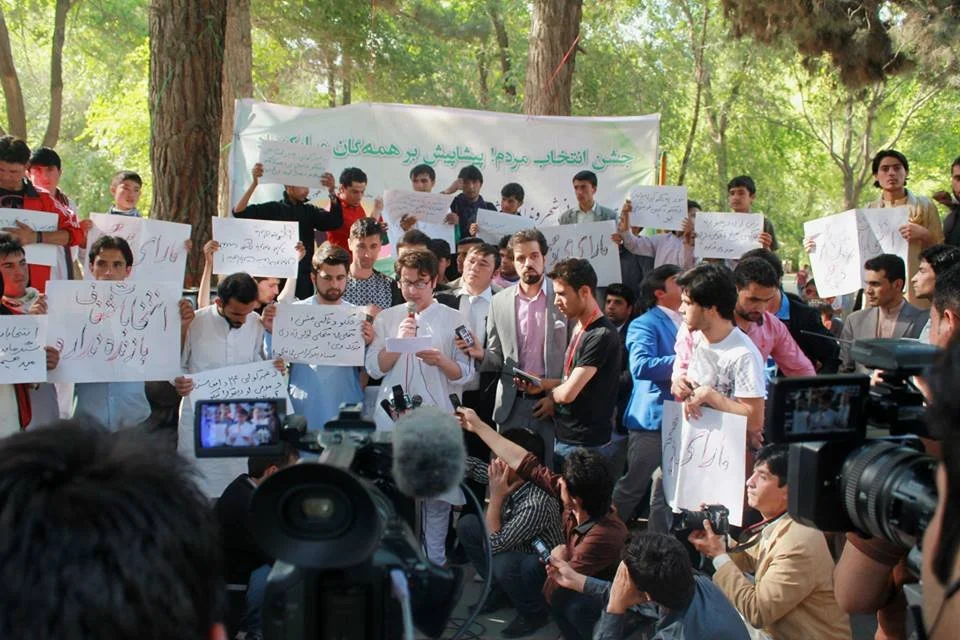
Campaigning for Afghanistan’s parliamentary election in Kabul
He reflects, " After years of war and darkness under Taliban regime, I saw the changes happen with my own eyes, and there was hope, real hope and a bright future for a new Afghanistan and a new generation.”
After finishing high school in 2003, Tareq made a life-changing decision: he would move to Kabul, the capital.
His father tried to stop him. "Who will be with you? You don't know anyone there. You're just a young boy." But Tareq felt something pulling him forward.
"There was a call inside me," he says. "Something was waiting for me there."
His father could not stop him; finally, he gave him his blessing. "All my prayers, all my support are with you. Go ahead. I believe you. Good luck."
When Tareq arrived in Kabul, everything opened up. Within a year, he was working with an airline, then with Afghanistan International Bank as an accountant. Over three years, he was promoted three times and got the position of senior finance officer in AIB's main office. But a question kept forming inside him: “Why am I sitting behind a desk calculating figures when I could be working with society”?
This question changed the direction of his life. He left that path and entered the humanitarian and civil society sector.
He joined the Norwegian Refugee Council, started supporting refugees and displaced people with education, technical training, shelter, food assistance, and community engagement. Later, he engaged with communities and youth groups, began volunteering in social activities, and simultaneously completed his bachelor's degree at Kardan University.
“When I remember those days now,” he says, “I ask myself: how was it possible that I was doing all of that, working, studying, volunteering, and taking part in social activities? But somehow, I did it.”
Tareq joined the Young Leaders Forum in 2010, a platform supported by the Friedrich Ebert Stiftung, a German foundation that helped young leaders grow their skills and civic engagement. He organized and coordinated capacity-building programs, conferences, and events. Later, he became the chief editor of Young Leaders Magazine.
He then began working with the National Democratic Institute for International Affairs- Afghanistan office, where he led initiatives focused on increasing youth participation in democratic processes.
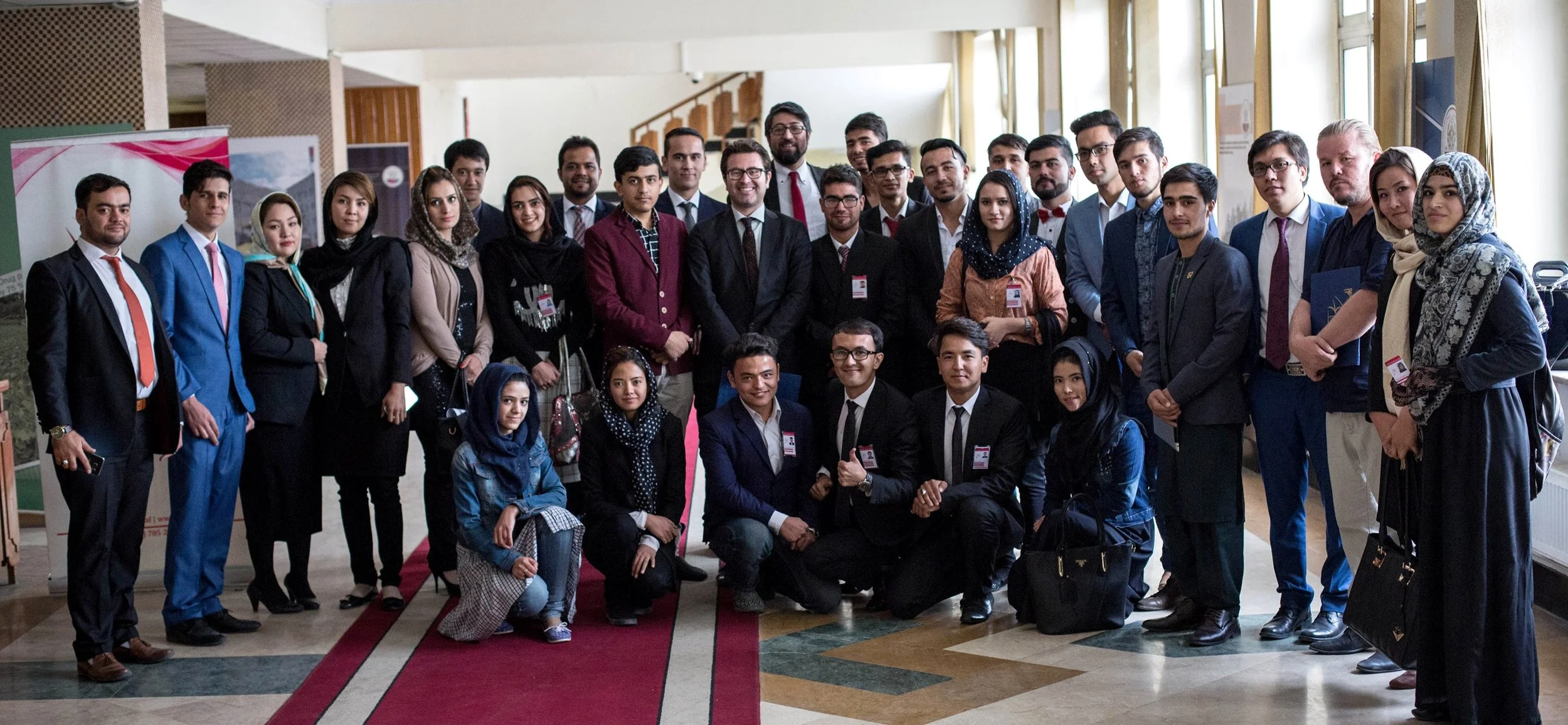
Afghanistan Youth Network, Kabul, 2015
During these years, his work in civil society deepened. He appeared in the media and society and became active in campaigns against corruption and in advocacy for education, human rights, youth empowerment, youth participation, and youth leadership.
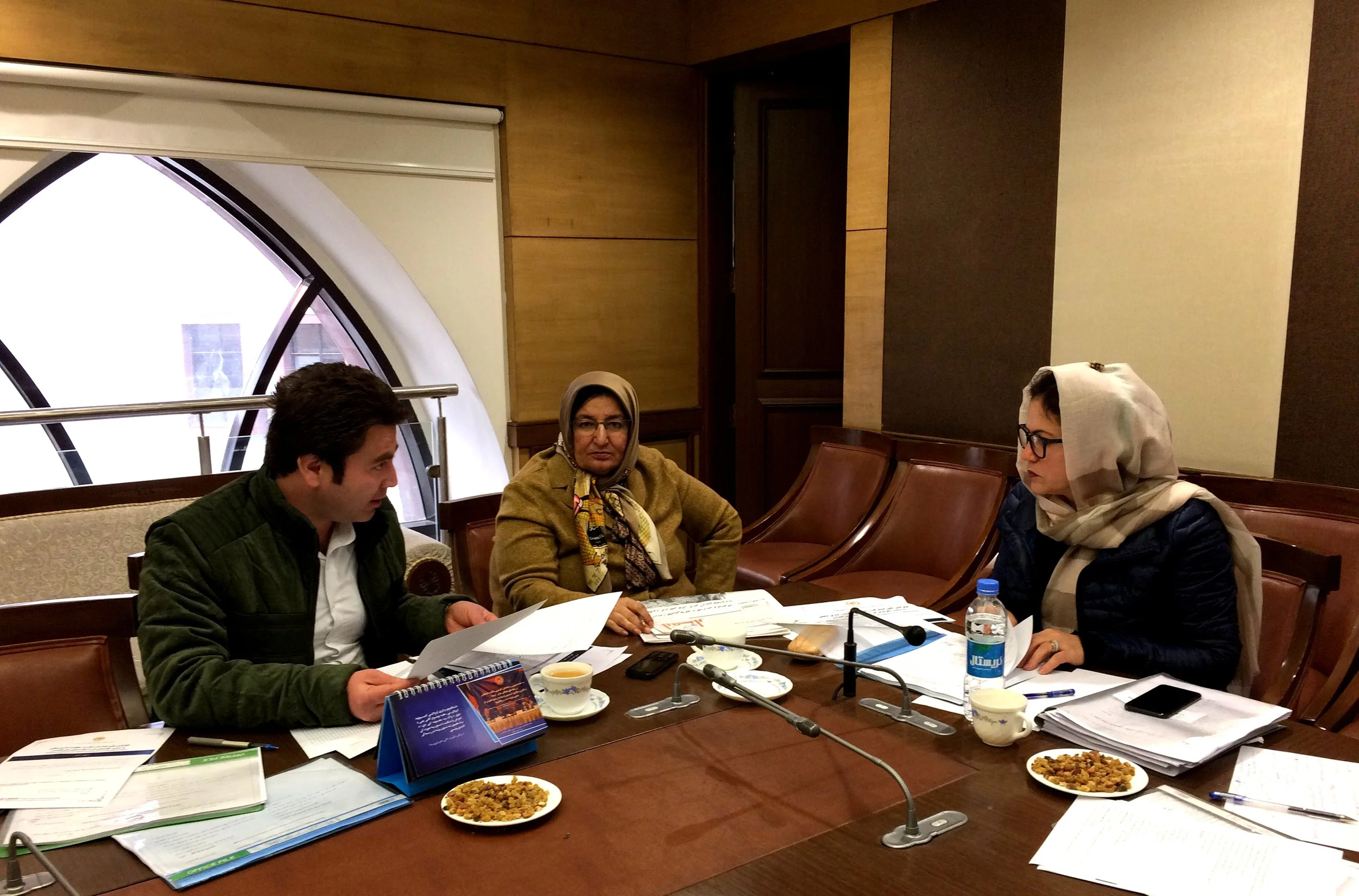
In 2012, he was invited to represent Afghan youth at the NATO Chicago Summit in Chicago, Illinois. “I was the voice of Afghan youth at the summit and side events,” he says. “When I was preparing to fly back to Afghanistan, a good friend tried to convince me to stay in the United States and start a new life. But I said no. I told him I had to go back. I had a lot to do there. I wanted to be part of the change, and I felt a responsibility. So I returned.”
In 2013, he represented Afghan civil society and youth at the World Justice Forum IV in The Hague, the Netherlands, and he has maintained a connection with the forum since then.

In 2014, he represented young leaders of Afghanistan, and he was the Afghanistan flag bearer, introduced by Bob Geldof, and delivered a speech on the main stage of the One Young World Summit in Dublin, Ireland. There, he shared the achievements and aspirations of Afghan youth in the new era of Afghanistan. He was recognized as a One Young World Ambassador.
Tareq traveled to several countries for cultural exchange programs, speaking about Afghanistan, the people, culture, and presenting the voices of Afghan youth and civil society, and challenging narrow images of a country too often seen only through the lens of war.
Later, he became Outreach Advisor for a USAID-supported project called ALBA in the Afghanistan Parliament. For four years, he worked with parliamentary commissions and members of parliament to strengthen their interaction with local government, educational institutions, civil society, women, youth, and media organizations. He led communication, outreach programs, national conferences, and public engagement events. He also played an active role in the establishment of the Afghanistan Parliamentary Institute.
In 2015, he founded The Generation Positive Organization (G+), with a vision to create a new identity for Afghanistan's new generation, a platform where young people could find their voices and build community even in the middle of conflict, and see themselves not only as victims of war but as leaders of change.
“We were committed and confident in empowering and supporting youth and nurturing a new identity for Afghanistan,” he says. “An identity built on volunteerism, participation, peace building, quality education, human rights, democracy, gender equality, positivity, and the creation of a positive society.”
Through G+, Tareq led and organized dozens of educational, awareness, and advocacy initiatives across Kabul and several key provinces of Afghanistan. The G+ and its initiative programs have been recognized by national and international organizations and signed cooperative agreements with many academic, cultural, and civil society institutions. Through G+, Tareq helped thousands of young Afghans raise their voices, access education and career opportunities, and see themselves as builders of a new Afghanistan, not just survivors of war.
This ongoing commitment and sense of purpose eventually led him to become one of the youngest independent candidates to run in Afghanistan’s parliamentary election in 2018. His campaign focused mainly on education, youth empowerment, and creating opportunities.
But even during these years of leadership and hope, violence remained a constant part of Tareq’s and the people's daily life in Kabul.
"During those years, I witnessed much violence, gun firing, bomb explosions, suicide attacks, in streets, schools, universities, hospitals, civil institutions, and mosques. Many times, it happened on my way to the office, to university, or to events. I was only a block or a few seconds away, and I survived by luck, while many innocent people were killed.” The Taliban claimed responsibility for all of these attacks.
Let me share one particular explosion: “One day, while I was working with USAID-ALBA, I was in my office on the third floor in the morning, right in front of the Afghanistan Parliament, a huge explosion shook the building. Glass, windows, and doors shattered and fell. My colleagues and I took cover under the tables. The firing started on the other side of the street, right in front of us. With the support of the office security team, we moved to the safe room while gunfire was ongoing outside. Many people were killed that day”.
By late 2020, the Taliban were gaining more power politically and militarily. They had opened an office in Qatar, and peace negotiations had begun. Later, the Taliban started gaining control of provinces in the south and west. Insecurity became more visible than ever. Most American and international troops had already withdrawn or ended their operations. Everywhere, people were talking about the possibility that Afghanistan could fall into the hands of the Taliban again.

Still, in Kabul, government offices, institutions, and organizations continued to operate. Many acted as though everything was under control in the capital. People lived between hope and danger, daily routine and deep uncertainty.

In 2021, he restarted working with another USAID Project called ADALAT as Head of Outreach and Advocacy. Then, on August 15, 2021, while Tareq was delivering a training session for civil society activists at Park Star Hotel in Shar-e-Naw, Kabul, his phone rang. It was the office: Tareq! "Dismiss everything. Get home immediately."
"On the way home through the streets, I watched the city unravel, chaos, traffic jams, people running and crying, calling family, searching for escape, going toward the airport. I got home after four hours, and I was shocked. I turned on the television. Every channel was reporting the fall of Kabul. I couldn't imagine Afghanistan falling in a single day, and seeing it with my own eyes. That night, Al Jazeera showed a group of Taliban who had entered the presidential palace. It was clear that the president and all the authorities had fled."
"It wasn't just the fall of a government or system," Tareq says quietly. "It was the fall of a nation. It was the fall of everything. It was the fall of hopes and beliefs and everything we had built in 20 years. All the achievements collapsed in front of us overnight."
He did not sleep for days and nights. He was shocked, overwhelmed, and captured by trauma. He could not believe he was watching the Taliban return after 20 years.
Every moment felt like a decision between life and death. During the evacuation operation, when he finally went to the airport, it was chaos, with thousands of desperate people trying to leave. He also saw strangers helping strangers, people sharing water, lifting children above the crowd, women asking for help, American troops checking documents, permits, and directing people toward evacuation points.
"I was a block away when a massive explosion went off right at the airport entrance. I survived. Many people, including American troops, did not. At that moment, I changed my mind. I turned back home. I thought I should stay for a while, then find another way out."
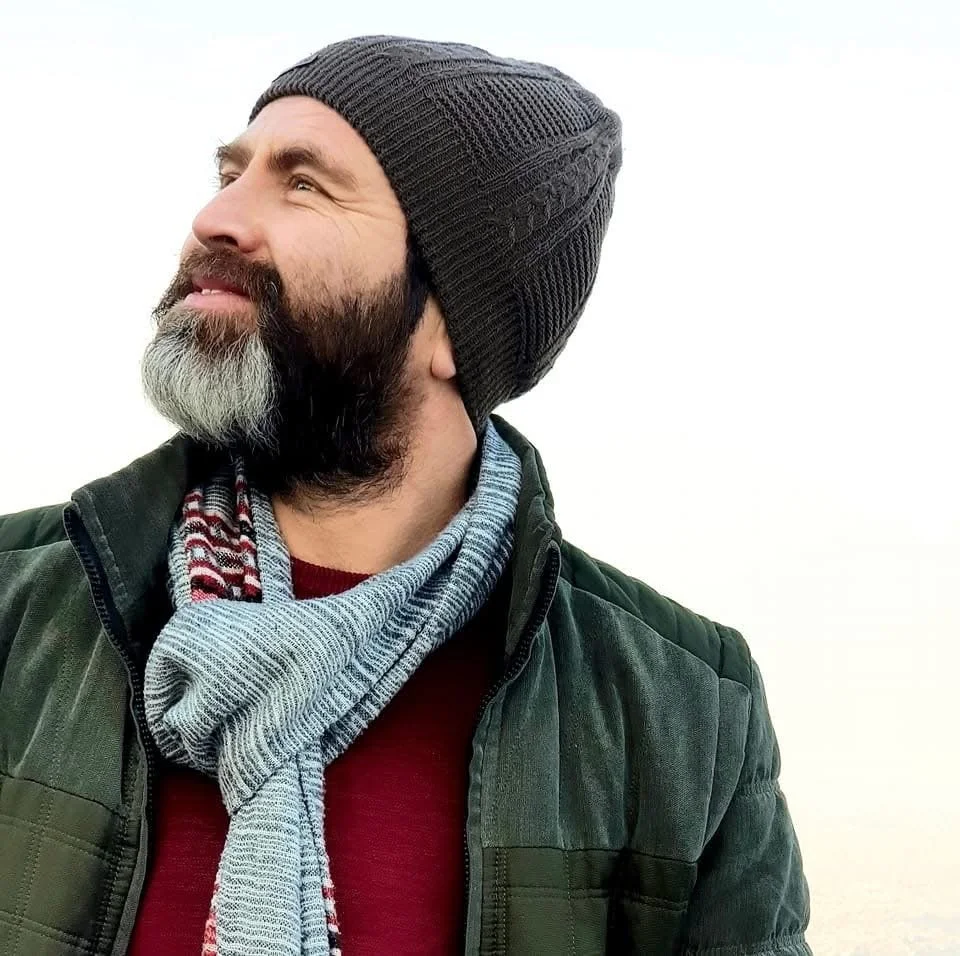
The main evacuation operation ended on August 31, 2021, at Kabul Airport, and the Taliban took full control of the country. Tareq could not find another chance to evacuate. For more than a year after the fall of Afghanistan, he lived with trauma and secretly between Mazar-e-Sharif and Kabul. He grew a long beard to avoid attention and stayed away from public life. “I stayed home,” he says. “I did not appear in public for a year.”

The Taliban began searching for and arresting people connected to the former government, international organizations, human rights work, civil society, and modern democratic ideas. Tareq was not separate from those risks. He had worked with USAID. He had been a human rights and youth activist. He had led a public organization and fought for democracy. He had spoken openly against the Taliban’s ideology. He was exactly the kind of person who could become a target.

“Leaving my country was not my choice,” he says. “It became the only way to survive, protect my life, and preserve even a small chance for a future.”
Finally, in December 2022, through a friend of a friend, he found a chance to leave Afghanistan for Islamabad, Pakistan. With support from international human rights organizations, he later moved to Germany, where he spent a year dealing with trauma, depression, anxiety, grief, and the pain of losing everything he had made for 20 years and his homeland.
In December 2023, he secured a U.S. visa and flew to California. Before flying to California, something happened that he still carries with him. His closest friend traveled from Paris to Berlin just to see him off at the airport. "He came all that way just for me," Tareq says. "In that moment, I felt I was not alone in this world." When they were hugging and looking at each other, his friend said: "Believe in yourself, my friend. I believe in you. Don't forget who you are, and always remember why you are here in this world and your purpose." Those words stayed with him on the plane. They still do.
"When I was about to land in California, I was thinking to myself: I am about to land in a city I have never been to. I told myself - stay open to whatever life is offering, and be with the flow." He pauses. "When I stepped off the plane at Oakland Airport, it was 11pm. No celebrations, no crowd. Just unfamiliar air and a strange quiet. Then I saw my friend waiting, and what I noticed most was the light in his eyes and the smile on his face. That small welcome was the first warmth I had felt in a long time."
He arrived with almost nothing: a passport, a backpack, and zero balance. But he carried something more difficult to measure - the weight of memory, loss, survival, hope, and resilience.
"Although it was so hard to forget or leave behind everything and start completely from scratch, I decided to begin a new chapter and dream of a better future here in the US," he says.
He focused on his mental health and started the healing process with the help of other close friends. He started working out, improving his English, joining community programs, engaging with neighbors, learning American culture and society, understanding rules and laws, and finding his way through a new system. He also began setting new goals, developing new skills, and preparing for higher education and future opportunities in the United States.
"Every small step is helping me to reinvent Tareq back and rebuild a new version of myself," he continued, “And Generation Positive is still alive. The work, the activism, the leadership and responsibility, the drive to make change, continues, but in a different place, a different way, and now with a global vision.”
"What people need to understand is that refugees don't come empty-handed. We carry pain, loss, and trauma, yes. But we also carry resilience, knowledge, skills, experience, hope, and dreams. We lost everything, but we haven't lost our humanity or our desire to contribute”.
“When you welcome a refugee, you are welcoming someone determined to rebuild, serve, and give back."
If he could speak to an American veteran who served in Afghanistan, he would thank them for the times they protected civilians and believed in the Afghan youth. He would tell them that while they experienced Afghanistan through deployments, Afghans lived the war continuously.
"We were fighting in our own way for peace, education, freedom, dignity, and a bright future." And he would ask them a question in return:
"How has Afghanistan stayed with you? What memories do you still carry? What about the humanity, the people, the culture, the history of Afghanistan?"
"Because this project isn't just about shared war," he says. "It's about shared humanity."
Links:
The Hollomovement effect, Page 38, It starts with us:
https://issuu.com/holomovementpublications/docs/the_holomovement_effect_issue_01_
The Generation Positive Organization (G+) fb page:
https://www.facebook.com/GPositiveOrg
The One Young World Summit, Dublin, Ireland (Video, 44:55 to 53:54)
https://www.youtube.com/watch?v=9cQejf_Hw8o&t=2891s