
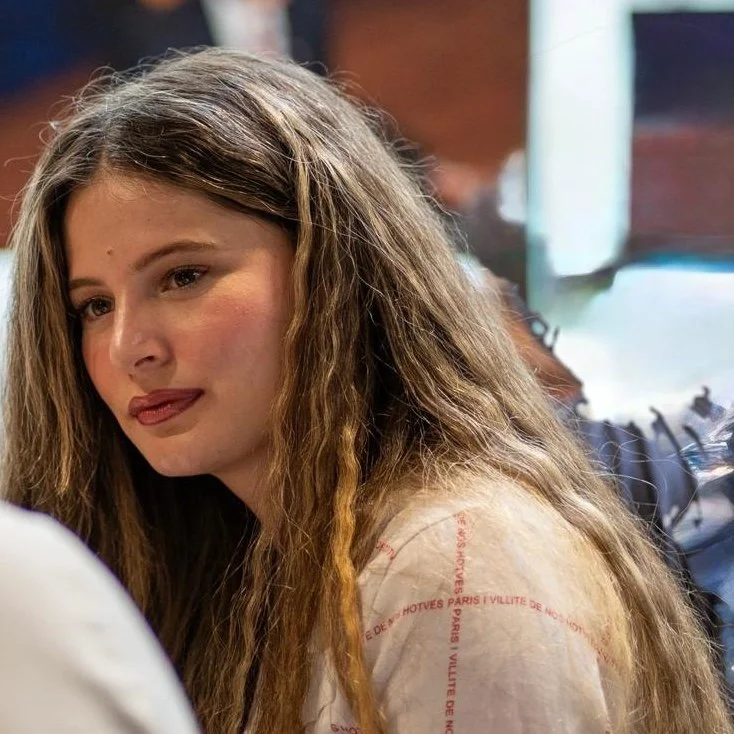
MUZGHAN
Afghanistan | USA
“Family doesn’t only come from blood. It also comes from the heart and kindness.”
WE’RE GOING TO DIE HERE.
Muzghan Khanzada sent the message to her sister while trying to force her way through the gates of Hamid Karzai International Airport in August 2021. Trapped in a crush of people fleeing Kabul after the Taliban's return to power, her hijab had been torn from her face and, at one point, she was thrown into a filthy canal outside the airport. Exhausted, soaked, and struggling to breathe, she was convinced she would never make it inside.
Then hands reached down from the other side of a concrete barrier. American soldiers pulled Muzghan and her sisters over the wall and onto the tarmac. She had made it into the airport, but her relief was short-lived. Her parents and brother remained somewhere in the crowd outside.
She had no idea whether she would secure a place on an evacuation flight, where she would be taken, or whether she would ever see her family again. She only knew this was her one chance to leave.
The Days Before
Growing up in Kabul, Muzghan had become accustomed to living alongside conflict.
"I got used to the sound of bomb explosions and the Taliban killing people," she recalls.
So when reports emerged that the Taliban were advancing toward Kabul in the summer of 2021, neither she nor her family believed the city would actually fall. The Afghan government and military was still in place, and the United States was still involved.
Starting at 18, her older sister, Mahjabin, had spent four years working as a translator with the Americans. When Mahjabin boarded an evacuation flight to the United States on August 9, 2021, Muzghan was devastated.
"We always had dreams together," she recalls. "Going to college, having our own apartments, building a life together."
She cried for nights after her sister left, unaware that only days later her own life would be turned upside down when Kabul fell to the Taliban on August 15.
"My family didn't let us leave the house," she says. "Everyone was trying to run home and be safe."
For nearly two weeks, the family lived behind closed curtains, watching events unfold through television broadcasts and the occasional glance out the window. Taliban fighters patrolled the streets below. Rumours spread rapidly about what life under the new regime would mean, particularly for women and girls.
As the youngest daughter, the fear swallowed her. She heard that the Taliban had announced they would marry off any unwed women under the age of 40. Muzghan made a pact with herself: "If an old Talib tries to marry me, I will jump from the sixth-story window."
When the call came offering an emergency evacuation path, she packed her life into a single black backpack in less than an hour. She mostly left everything behind, saving only a small teddy bear, named Ashpazak, she had owned her whole life.
A View From the Floor
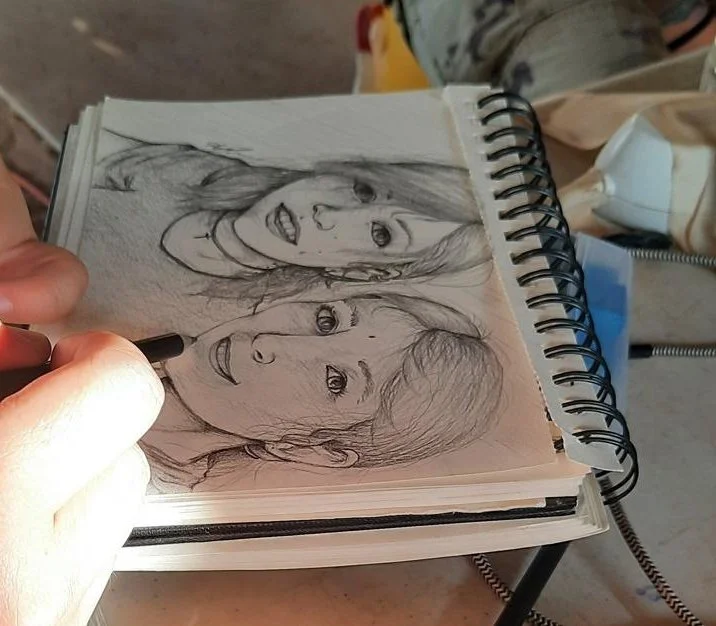
Muzghan created relationships with soldiers in the U.S. army. One woman drew a picture of them together.
The escape was a blur of military cargo planes where hundreds of refugees sat shoulder-to-shoulder on the floor. They flew into the blistering heat of a refugee camp in Qatar, where Muzghan learned a suicide bomber had struck the airport gate, in Kabul they had just escaped.
For hours, she was tormented by silence. When she finally reached her brother, he confirmed that while her family was alright, they had seen the bomb exploding in front of them and had witnessed people dying. The gates had closed, the Americans left, and Muzghan’s brother and parents were stranded in Kabul.
The sisters pressed on alone to Washington D.C., and eventually to the Dona Ana refugee camp in New Mexico. Life in the camp meant sharing a massive tent with a hundred strangers.
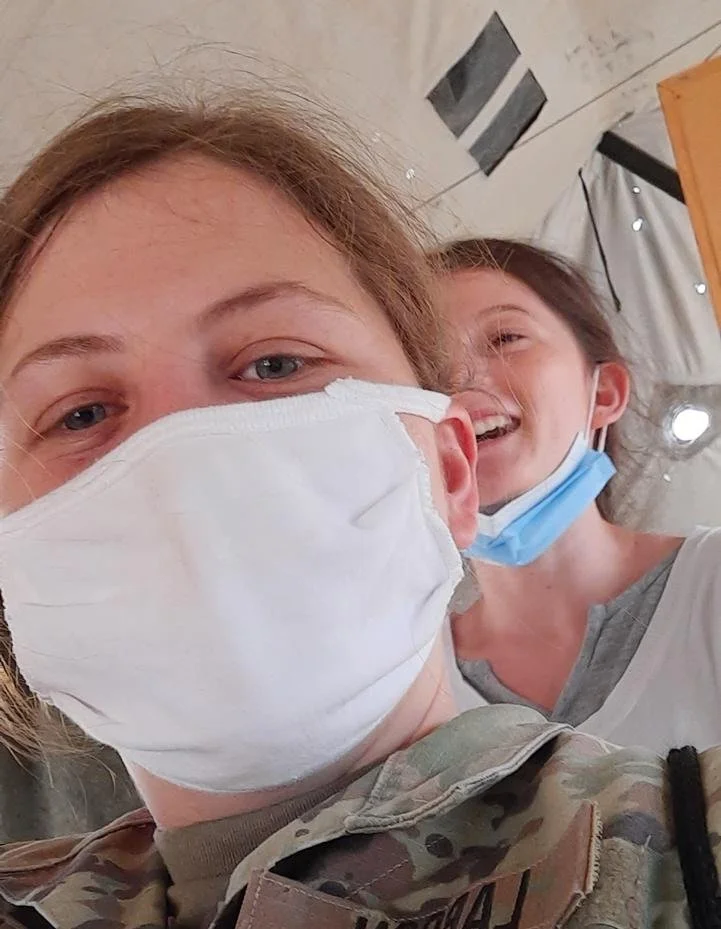
Yet, amid the waiting, Muzghan found an echo of her childhood dreams. As a girl in Kabul, she used to wave at passing American military convoys, wishing to meet them. Now, she was working alongside them. Equipped with basic English phrases, she became a clinic translator for Pashto and Dari speakers.
“The soldiers gave me snacks and gifts,” she remembers. “Slowly, slowly I learned new words in English, how to speak and how to communicate with them.”
The soldiers taught her to read and write, and one even gave her a giant teddy bear to keep her company. She worked from dawn until 11 p.m., quieting her uncertainty by immersing herself in a new language. During Operation Allies Welcome, Muzghan provided Dari and Pashto translation and interpretation for more than 18,000 Afghan evacuees, helping families access medical care, resettlement services, and essential resources as they rebuilt their lives.
Imagine What an Educated Mother Could Do
In December 2021, Muzghan landed at Oakland International Airport to reunite with Mahjabin.
“We just ran to each other, hugged, and cried,” she remembers. “And then I was just like, I wish that my brother and parents could be with us. Because I had been feeling their empty spot in my heart.”
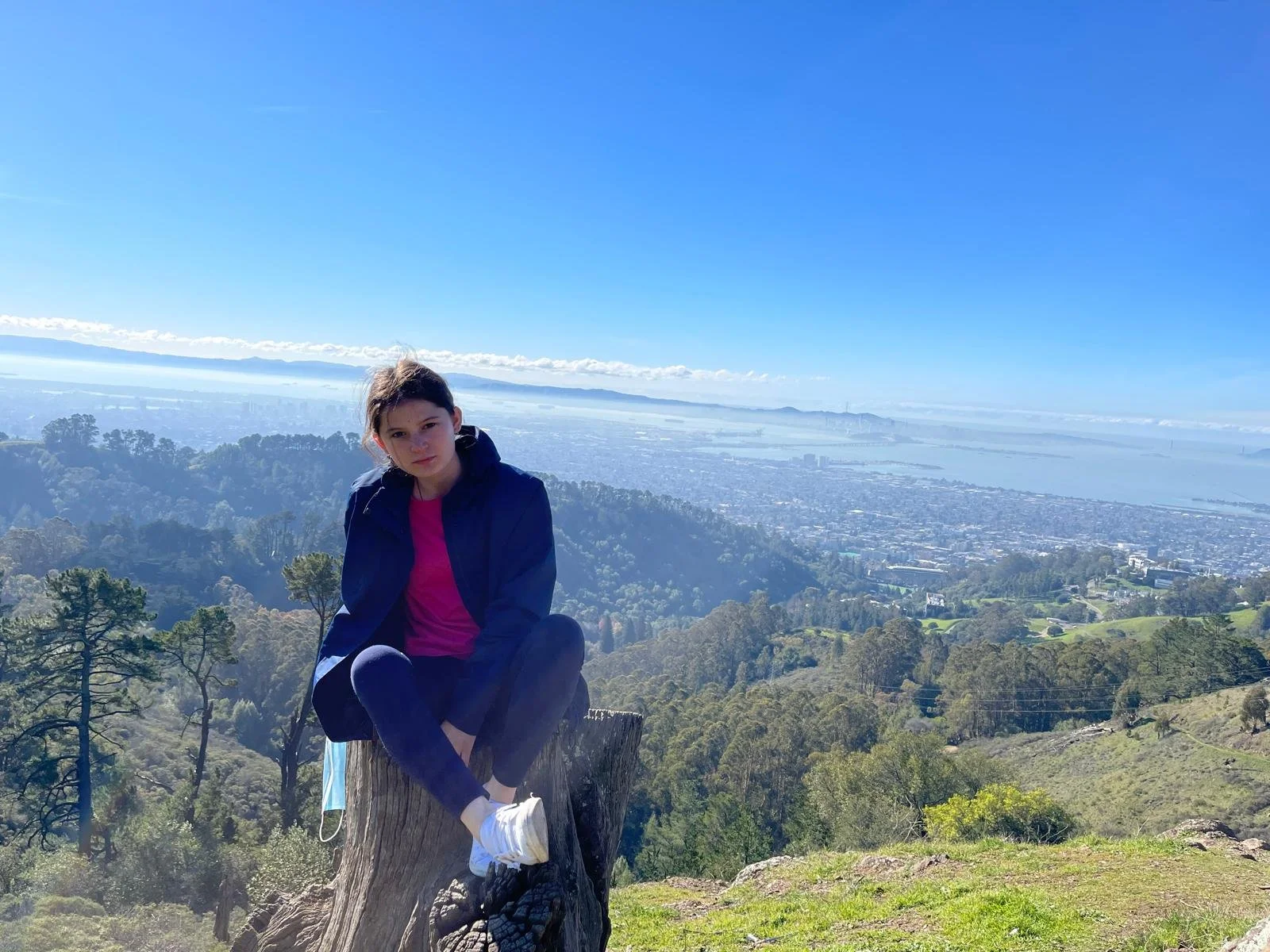
Muzghan, after she arrived in Oakland
Standing beside her sister that day at the airport was Emily, an American woman who became their "American mom." On that rainy night, Muzghan realized a profound truth.
“Family doesn’t only come from blood. It also comes from the heart and kindness,” she says.
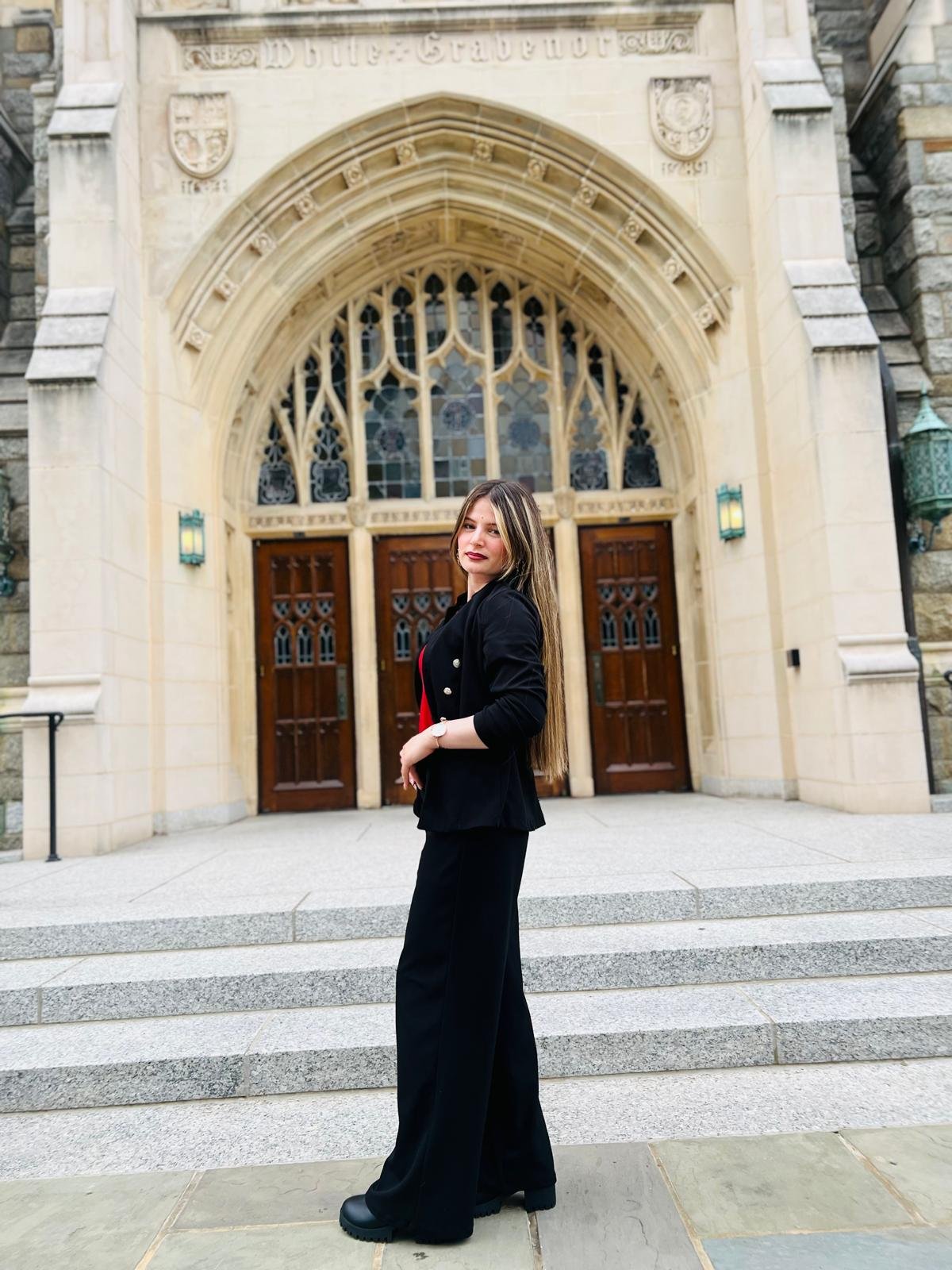
Four years after crossing that airport wall, Muzghan is a junior at the University of San Francisco, studying political science and legal studies, and a Dean’s List student and Muscat Scholar. She has emerged as a campus leader, mentoring students, advocating for the Afghan community, and founding two organizations celebrating Afghan heritage and cross-cultural understanding.
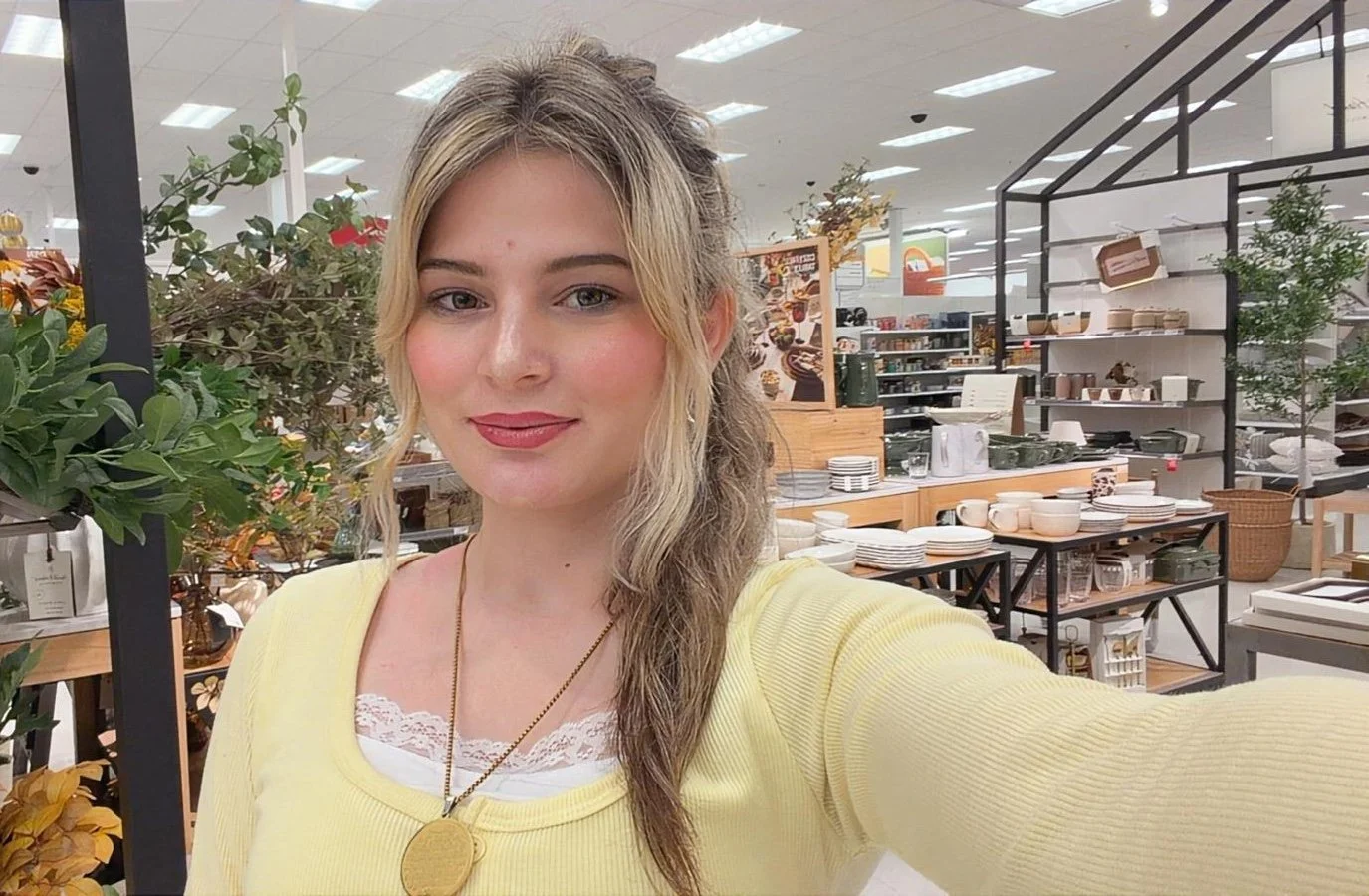
Education is at the heart of her work. She teaches English to Afghan refugees and women, counsels underserved students through the college admissions process, and works to create educational opportunities for Afghan women and girls wherever she can. She is now building her first nonprofit, dedicated to expanding access to education at any age.
Her advocacy extends beyond campus. Through Refugee Congress and other immigrant and refugee organizations, she has worked on policy, youth mentorship, legal services, and community support. Fluent in English, Dari, and Pashto, she aims to pursue law and become an advocate for immigrants, refugees, and underserved communities.
Her parents and brother remain in Kabul, under a regime that has closed schoolhouse doors to girls. For Muzghan, the fight for Afghan women’s right to education is deeply personal. She sees education not as a privilege, but a necessity- and is determined to help Afghan women access it in every way she can.
“I am so grateful to my mom…she isn’t educated,” Muzghan says. “If a woman who does not have an education can raise a child like me and my siblings, can you imagine what an educated woman could do?”