
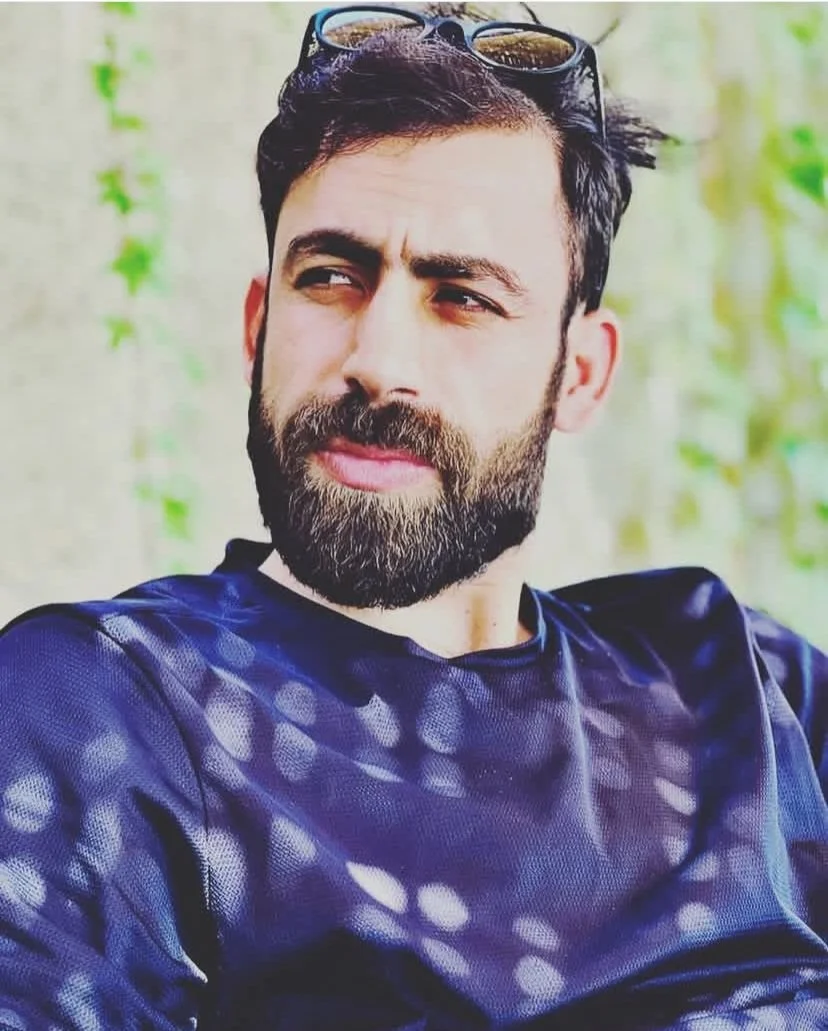
MOURAD
Iraq
"The challenges in life can make you a victim. Or they can make you a survivor.”
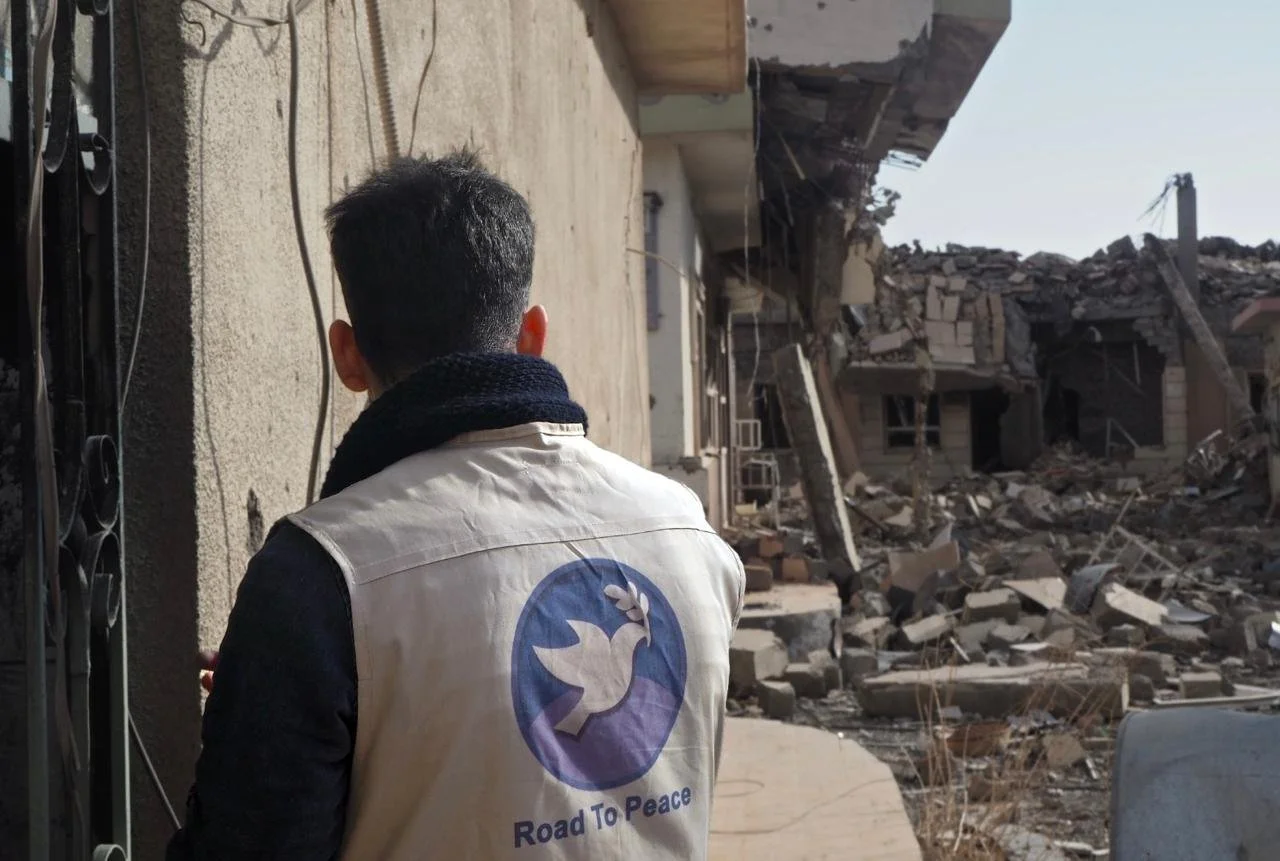
EVERY MORNING, MOURAD WALKED SEVEN KILOMETERS TO SCHOOL AND SEVEN KILOMETERS HOME. The world, then, was that size.
He grew up in the countryside outside Sinjar, in northwestern Iraq, among the Yazidi — an ancient religious minority that had lived on that land for thousands of years. His childhood was close-knit, unhurried, shared with Yazidi, Muslim, and Christian neighbors who moved through one another's lives with ease. The income was low, he says, but no one thought much about that.
Then one day, three car bombs exploded near the soccer field where he was playing. One of his cousins was killed.
“It was one of the things that really made me feel that there is a big fear in my city and in the community that I live.”
When U.S. troops arrived in 2003, Mourad was still a boy. At first, the encounters felt almost sweet — he and his friends ran up to soldiers on the street asking for chocolate, for balls, for anything, trading scraps of English for small gifts. But the sweetness did not last. As car bombings and insurgent attacks multiplied, the convoys hardened. The rules became unspoken but absolute.
“When their military cars moved on the street, we knew to go to the side and stop until they crossed. Because if you didn’t, they could shoot you.”
Many people were killed this way. Drivers who didn't move quickly enough. People who didn't understand. “The relationship became very bad between us and America.”
When U.S. forces withdrew, they left what Mourad calls “a gap” — in intelligence, in control, in the fragile order that had kept everything from collapsing. Into that gap came ISIS.
* * *
It was Eid. The cousins and uncles and children were together on the family farm when the phone call came — there was fighting at the front. Mourad’s father, twenty-two years in the Iraqi military, went to help. By three in the morning, he still had not returned.
Mourad looked out toward the road. Thousands of cars were moving toward the mountain.
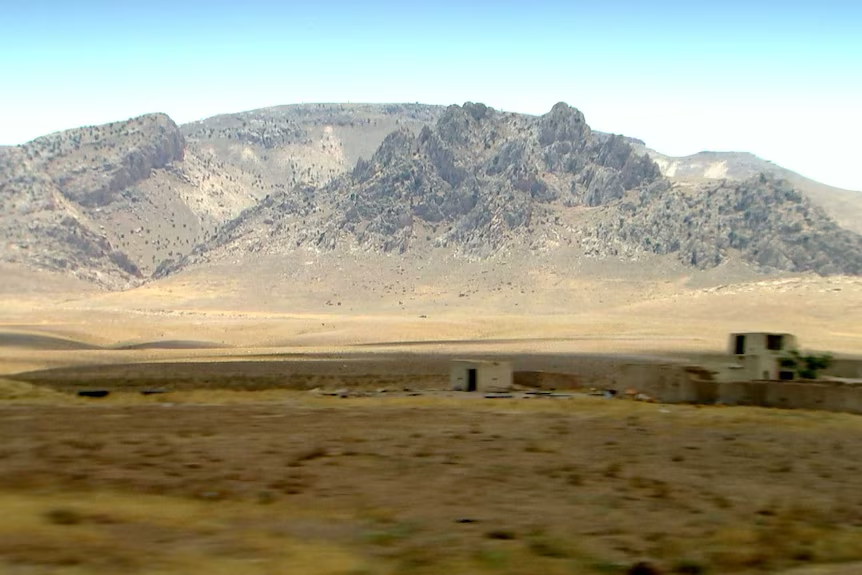
Sinjar Mountain
He ran to the street and grabbed people, demanding to know what was happening. An old woman in the back of a fleeing car turned and looked at him.
Go. Go escape and rescue your life. They are coming.
They waited. His father arrived at dawn, covered in dust, barely standing. His mother told him to get in the car. He refused. He wanted to stay — wanted to kill one ISIS fighter before he died, and then it would be enough. The family begged. They argued. They negotiated. Finally, they pulled him in.
Twelve people in one car. No clothes beyond what they were wearing, no water, no food. Just the road and the mountain rising ahead.
Two of Mourad’s uncles did not make it. Twenty-two members of his extended family were taken. “Until now, we don’t know anything about them. They are still missing.”
* * *
For seven days, Mourad’s family sheltered on the rocky slopes of Sinjar Mountain with hundreds of thousands of others. ISIS surrounded them on four sides. There were no trees, almost no water. A half-liter bottle passed between many hands, each person taking the smallest possible sip. Several children died of thirst.
Young Yazidi men with old Kalashnikovs organized themselves into guard units, watching the ridge lines, buying time. From the villages below, ISIS broadcast messages up toward the mountain:
We are your friends. Come down. We will not hurt you.
Some families believed them. They came down, and they were taken. The others stayed — cooking lamb over open fires, rationing bread, watching the ridge lines — and waited.
Kurdish forces eventually opened a corridor north through Syria. After seven days, Mourad’s family descended and made their way to Kurdistan, then to Turkey, where they stayed for nearly a year.
* * *
Behind them, the Islamic State spent three years methodically unmaking Sinjar. Yazidi homes were looted, their contents sold in Mosul and Syria. Houses were blown up. Women were taken and held in the hospital because the building’s walls, Mourad learned later, offered protection from airstrikes. Anyone who refused to convert was killed.
What happened to the Yazidis in 2014 is widely recognized as genocide.
In August 2014, the extremist group Islamic State attacked the Yazidi homeland around Sinjar in northern Iraq. During this attack—known as the Sinjar massacre—ISIS deliberately tried to destroy the Yazidi community.
What happened included:
Mass killings: Thousands of Yazidi men and older women were executed in villages around Sinjar.
Kidnapping and slavery: More than 6,000 Yazidi women and children were taken and sold or forced into slavery. Survivors like Nadia Murad later spoke to the world about these crimes.
Forced conversion: Yazidis were forced to convert to ISIS’s ideology or face death.
Destruction of homes and culture: Villages were looted and destroyed, and religious sites were attacked
In the village of Kocho — a small, enclosed community with no road out — the killings took less than an hour. Mourad has walked those sites. He has stood over the earth.
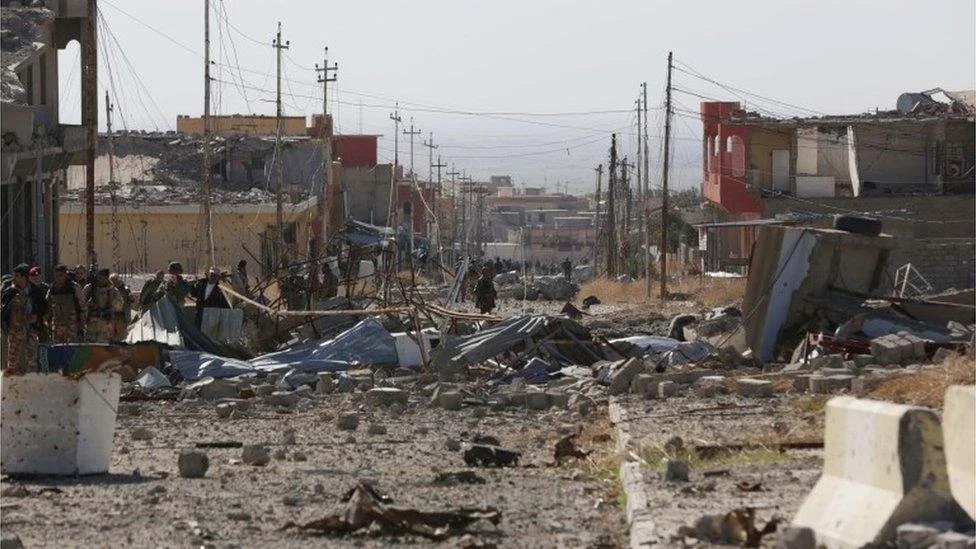
By the time the city was liberated, there were almost no structures left standing. In and around Sinjar, more than 200 mass graves have been documented.
“You just imagine how all these people have been killed in one hour, and no one came to help them.”
“The international community was able to protect us from the genocide. But they didn’t.”
* * *
The genocide in Sinjar is now recognized by the United Nations. Justice has come far more slowly. The UN investigative mission in Iraq has concluded its work. Most international NGOs have withdrawn, ISIS members still move freely in parts of the country, survivors have received little reparation, and much of the city remains in ruins.
For twelve years, Mourad has stayed — distributing food, building shelters, running women’s empowerment centers. His parents and several siblings have resettled in Germany, and he is hoping to pursue a master’s degree in human rights there.
He is not sure he will go. There is still need.
* * *
“I believe that pain can change us,” he says. “Many people feel that they are victims of this darkness, this genocide. But others feel they are survivors. The challenges in life can make you a victim. Or they can make you a survivor. And if you become a survivor, you can make a difference in the future.”
When Mourad was a boy, his world stretched seven kilometers to school and seven kilometers back. War shattered that small circle — carried his family across mountains, across borders, and into exile.
He remains in Sinjar, in the place where the story began.
Still walking forward.