
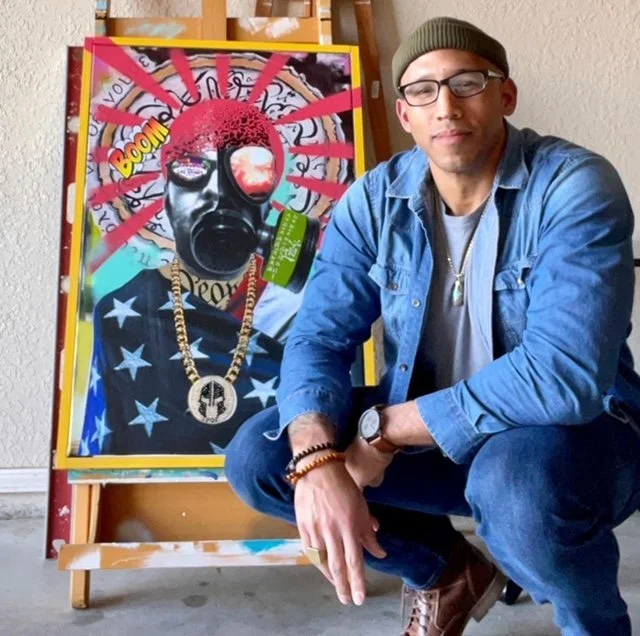
MIKE
Veteran | Iraq | Pakistan | South Korea
“I was too young to understand what service would really ask of me.”
MIKE WAS A HIGH SCHOOL SENIOR IN ILLINOIS WHEN THE ACCEPTANCE LETTER ARRIVED FROM THE ART INSTITUTE OF CHICAGO. It opened the door to the life he wanted, but financially it felt impossible. His father had served, and the military offered a clear path forward, steady and structured, within reach for a seventeen-year-old who didn’t yet know how to build a future. “I was too young,” he says now. “Too young to understand what service would really ask of me.”
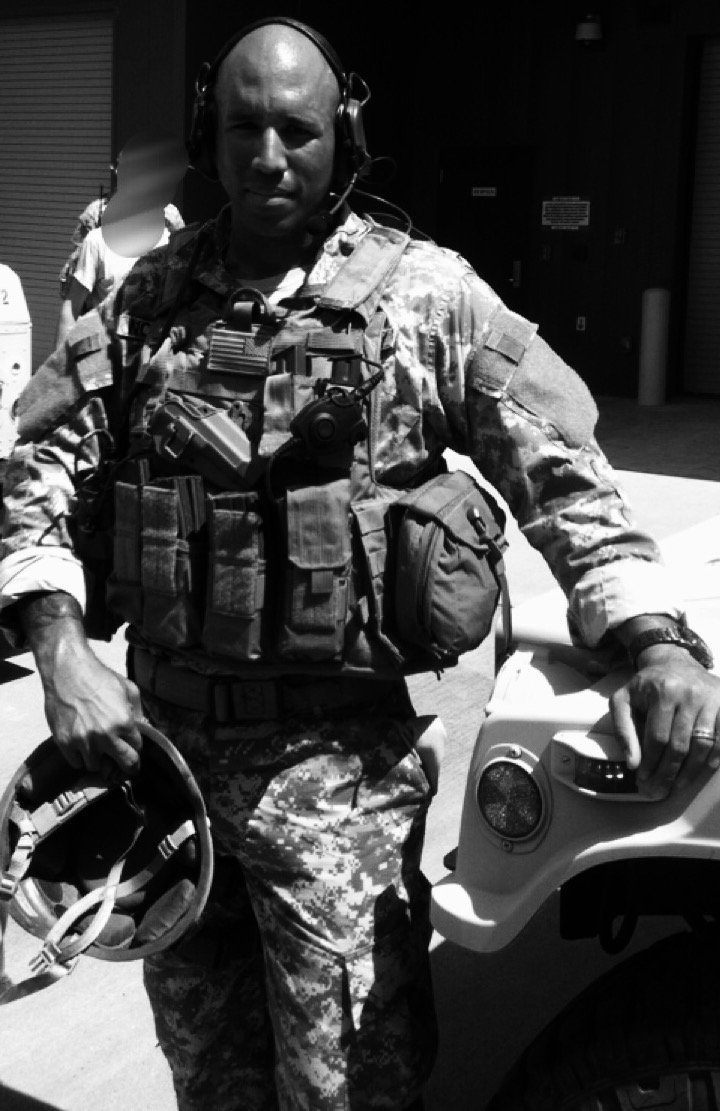
He’d grown up on images of cinematic heroism: Rambo, G.I. Joe, men sprinting through mud with camouflaged faces. He laughs at how simple he imagined it all to be. When the recruiter asked where he wanted to go, he said, “As far as possible.” That wish took him to South Korea, the first place that challenged his sense of America as the center of everything.
From there, his world unfolded in quick chapters: Fort Bragg, Fort Campbell, Fort Sill, Fort Carson. Germany. Iraq. Korea. The Pacific. He lists the places almost casually, as if naming old apartments he once lived in.
Becoming a drill sergeant was a peak in his career, a moment when he felt he had finally embodied the warrior he once romanticized. But by 2012, the internal strain became impossible to hide. Depression, anxiety, and PTSD surfaced. Outwardly he kept the posture of a soldier; inwardly he felt himself drifting farther from who he actually was.
Healing came slowly. Therapy helped, but only partially. Medication didn’t sit right. What reached him was the thing he’d turned away from at seventeen: art. What once felt “not masculine enough” became a way to find himself again. Yoga, meditation, and mindfulness followed, giving his mind a place to land.
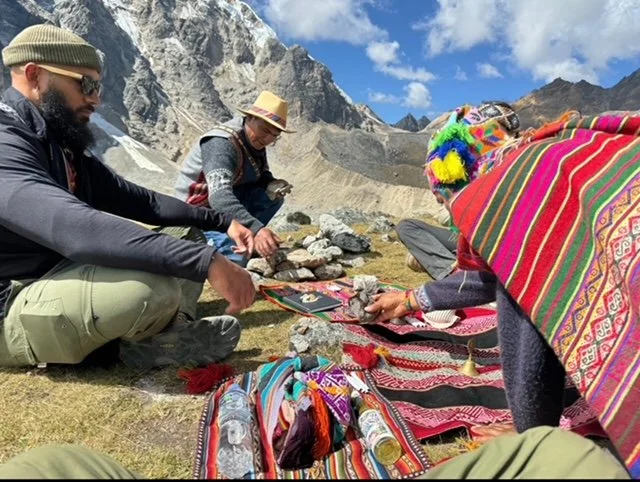
One of the most transformative periods of his service came during a months-long Pashto language course at Fort Bragg, NC, in preparation for working with foreign military partners in Afghanistan. Each day, he traveled to his instructor’s home, where lessons unfolded at a kitchen table instead of a classroom desk. In that quiet domestic space, his understanding of the world began to shift. The teaching was never just vocabulary. Mike watched how his instructor lived, how he worked, prayed, fasted, how he moved with a steadiness that softened assumptions Mike hadn’t realized he carried.
“That experience opened me in a way nothing else had,” he says. Their meetings always began with the same simple ritual: How are you? How is your family? Over time, those questions became a doorway into something deeper.
When Ramadan came, he watched his teacher fast from sunrise to sunset, holding himself with quiet discipline and grace. The next year, Mike tried it too. “Now I fast most years,” he says. “It reminds me of him. Of that connection.”
The experience stayed with him, and it reframed the way he thought about his deployments—how suspicion had once shaped every interaction, and how slowly curiosity began to take its place. The shift from Operation Iraqi Freedom to New Dawn, and later watching the Afghanistan withdrawal, left him with questions he still carries. A friend once told him, “Sometimes what starts wrong is more likely to end wrong.” The line follows him even now.

He talks about the rituals and conditioning that form a soldier, the mottos, the oaths, the bugle calls, the promotions and ribbons that become markers of worth, and the abruptness of leaving it all.
In the years since, Mike has earned a master’s degree in humanities and is now pursuing his PhD, trying to understand what it means to be human, to draw lines, to fight, to forgive. He has been finding his way back — to himself, to community, to the parts of him he left behind.
Today Mike moves through the world as an artist and scholar, reshaping the very idea of what a warrior can be. His workshops help others navigate their own stories of service, trauma, identity, and return. Guardian Rising grew from that work, a guidebook for young soldiers standing on the edge of decisions they can’t yet understand.
He doesn’t pretend to have all the answers. What he has instead is intention — to show up differently, to help repair what was broken, to live with clarity rather than conditioning. “Re-humanizing,” he says, “is the real work.”
And every day, he commits to it.