
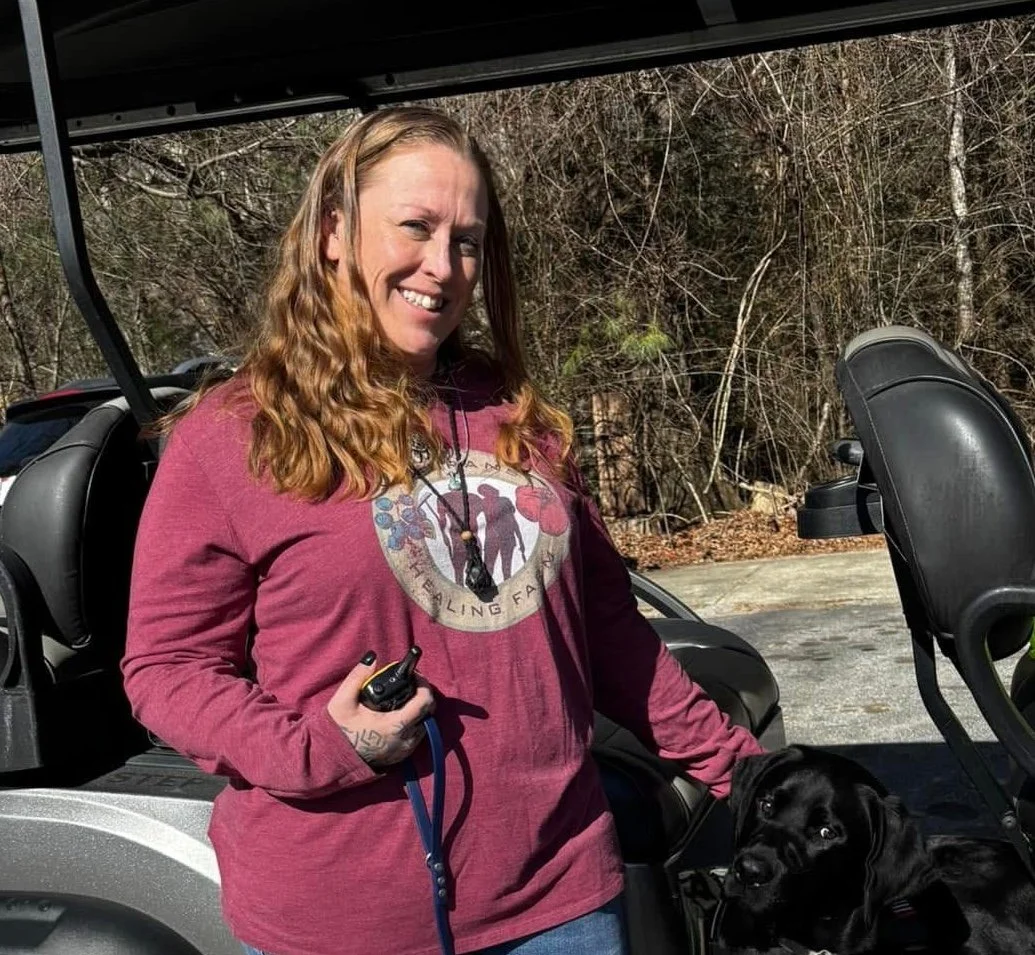
MEGAN
Veteran | Morón, Spain
“Serving was one of the hardest things I’ve done—and one of the things I’m proudest of. I did something that not a lot of people are willing to do.”
MEGAN GREW UP IN A SMALL TOWN IN ILLINOIS AND ALWAYS KNEW SHE NEEDED TO GET OUT. College didn’t appeal, and staying put wasn’t an option. When two friends met with a recruiter, she decided to tag along. They didn’t join. She did. Her boyfriend at the time told her she wouldn’t go through with it. “Watch me,” was her repsonse.
That same independence and determination carried her through basic training. Before enlisting, she talked with anyone who had recently finished boot camp or tech school, asking what to expect. Still, nothing prepared her for the mental challenge. “They exhaust you mentally and physically, and then build you back up,” she said. “That part I wasn’t ready for.”
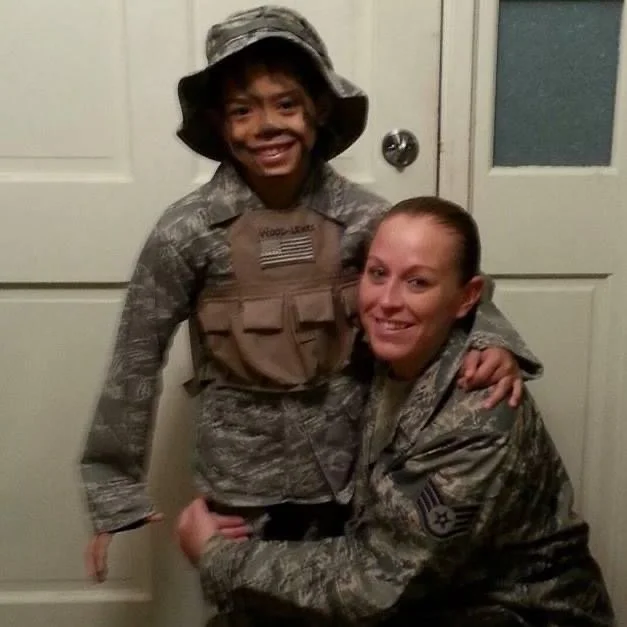
After training in Texas, she was stationed at Charleston Air Force Base in South Carolina. Not long after, she became a mother.
While still in the hospital after giving birth, her supervisor called to congratulate her – and to tell her she’d been placed on the deployment list. She could waive her extended maternity leave and deploy to Spain, or take her full leave and risk being sent to Afghanistan or Iraq later. “It was pretty much guaranteed that if I didn't go to Spain, I was going somewhere in the desert.” She chose Spain.
Her son was three months old when she left for a six-month deployment to Morón, Spain. During that time, her father cared for her baby. “He did what needed to be done,” she said. With no video calls then—only mailed photographs and cards—she feared her son wouldn’t recognize her when she came home. Driving back from deployment, she cried most of the way, worried about how he’d react. “They've raised him longer than I have. Is he going to have an issue with being around me?” she wondered. When she finally arrived, she sat down on the floor. “He came straight to me,” she said. “I lost it. I was so scared he wouldn’t remember me.”
Motherhood and military service were often in conflict. “You’re taught that your military service comes first,” she said. “But then, on top of that, this is your child. Trying to find that balance is very hard.” Sometimes her friends would ask how she handled milestones and the trials of having a new infant. “I didn't get to do those things with him. I wasn't there.”
Megan also endured profound challenges: she survived sexual assault during her service, and while pregnant, discovered that her son’s father had been arrested and put into the brig—a military prison. “There was a lot that I dealt with mentally in the military,” she said. “But I look back at my service knowing there was good and bad in it. I still have my son, I still have my life, and I’m still standing.”
Despite everything, she remains proud of her service. “Serving was one of the hardest things I’ve done—and one of the things I’m proudest of,” she said. “I did something that not a lot of people are willing to do.”
Leaving the Air Force was difficult. “Because you do lose that purpose and that pride that you have in your service,” Megan explained. She worked in social services, then became a caregiver when her husband—a fellow veteran—was diagnosed with a brain tumor. She cared for him through treatment until he passed in 2019, and later cared for her mother-in-law.
Then, by coincidence, she found Veterans Healing Farm.
When she drove to interview for a position, her phone’s GPS kept switching to walking directions. The farm was right across the street. “Right where I was supposed to be, when I was supposed to be there,” she said. Working there gave her a sense of mission again. “We’re all out there trying to find that other piece of us again,” she said.
Her years of service changed how she sees the world. “Things aren’t so black and white as a lot of people want to look at it,” she said. “You find it kind of hard to relate to people when you get out. While you're in the military, the people you work with are your family. You have to trust them to literally have your back. You don't have that connection as much out of the military."
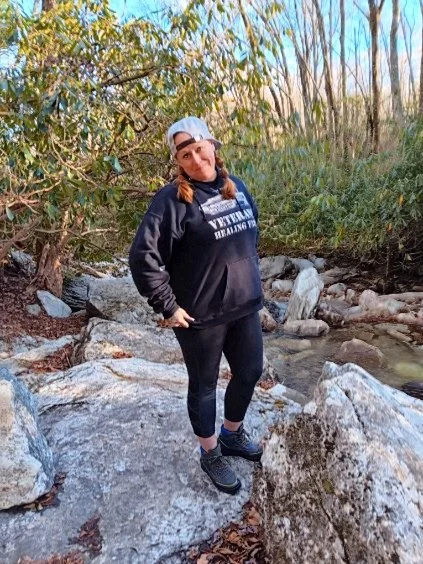
Transitioning from a male-dominated field to working mostly with women in social services was also an adjustment. “In the military, there was no filter,” she said. “Whatever was in there just came out of your mouth.”
She has a tattoo on her arm that reads adapt and overcome—words that remind her of the perseverance she learned from her service. “You always have to keep moving forward. Sometimes you have to laugh or you’ll cry,” she said.
To younger generations, she hopes her story offers both pride and perspective. “I’m very proud of the fact that I served in the military,” she said. “It gave me a sense of pride in myself and in my country, but don’t let it define you. Be your own person as well.”
Now, she pours that same commitment into the Veterans Healing Farm—helping others grow, recover, and reconnect. “If there’s one, there needs to be two,” she said. “If there’s two, there needs to be four. There needs to be more places like this.”