
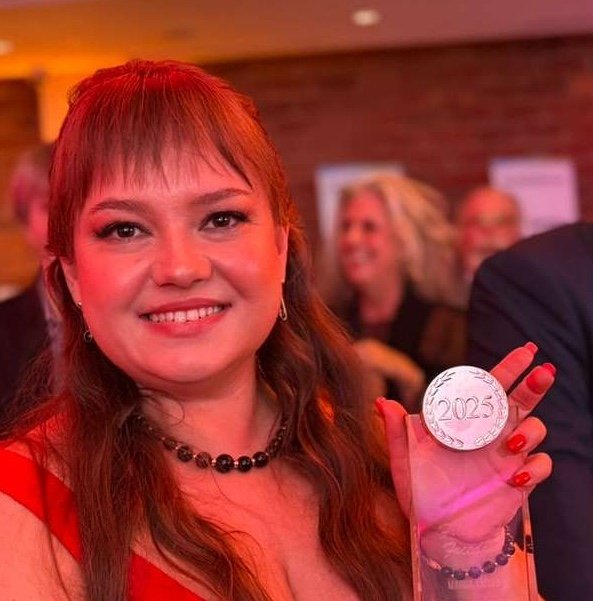
MARIIA
Ukraine
“I just see a problem and try to solve it. I’m still fighting.”
WHEN MARIIA YATSKO TALKS ABOUT SURVIVAL, SHE DOES SO MATTER-OF-FACTLY.
“I was fighting in my country to survive,” she says. “Now I’m fighting in this country to survive.”
She says it calmly, despite everything the sentence contains: war, displacement, separation from family, starting over in a language she did not speak, and navigating an immigration system that still leaves her future uncertain.
Mariia arrived in the United States from Kharkiv, Ukraine, in 2022 through the Uniting for Ukraine sponsorship program after Russia’s full-scale invasion forced her to flee with her son. Her husband stayed behind initially, and, at the time, she believed she would eventually return home.
“I thought it was a mistake,” she recalls of the morning the war began. “That it could not happen.”
At five in the morning on February 24, her husband woke her to tell her explosions had started. Kharkiv — Ukraine’s second-largest city and one of the closest major cities to the Russian border — quickly became one of the first targets of the invasion. Within ten minutes, she had packed two backpacks with documents and clothing. She still has them today.
“We were never able to go back,” she says. “We don’t have a house anymore.”
Before the war, Mariia says she had built a life she loved. She held two master’s degrees and worked as the head of a department in Ukraine’s oil and gas sector. She describes herself as happy, stable, and deeply rooted in her home city.
“I didn’t even dream of coming to the United States,” she says. “I was happy in my city, in my country.”
Starting Over
Mariia settled in Georgia with the help of her sister, who had already been living in the United States for more than two decades. However, arrival did not bring immediate stability. The first year, she says, was extremely difficult. She did not speak English fluently, struggled to figure out unfamiliar systems, and worried constantly about health insurance for her son while trying to process the psychological aftermath of war.
“When I first arrived in the United States, I was afraid of every noise,” she says. “The planes in the sky, everything. My brain was very damaged, and I needed psychological support.”
Despite this, Mariia built a future in a completely unfamiliar country. She researched everything herself — Medicaid, food assistance, work permits, refugee programs — spending hours online trying to understand systems no one had properly explained to her. She eventually applied for Medicaid and food stamps independently and was relieved when she was approved.
Around the same time, she found work at McDonald’s and needed a bank account to receive her paychecks. A routine trip to Wells Fargo unexpectedly changed the course of her life. As she explained her situation to a banker, he listened carefully and told her about New American Pathways, a nonprofit refugee resettlement organization in Georgia that helps refugees purchase their first cars.
For Mariia, transportation represented far more than convenience. In Georgia, she quickly realized, a driver’s license and a car were essential to accessing better employment opportunities. Back in Ukraine, she and her husband had owned a car, but she had never driven herself.
The banker offered to connect her. Later, while researching the organization online, Mariia discovered they were hiring Ukrainian and Russian speakers.
“So I called and told them I could apply for a job,” she says.
Her first interview in English lasted forty-five minutes. During the interview, she explained how she had managed to navigate public assistance systems on her own despite speaking very limited English. The interviewers were stunned and offered her a position as a case specialist in the organization’s Ukrainian program.
“They told me, ‘You cannot be our client. Choose either the job or being a client,’” she says with a laugh. “Of course, I chose the job.”
The American Father
As Mariia slowly began rebuilding her life professionally, another unexpected relationship would shape her experience in America just as profoundly.
Before she got her first job in the United States, Mariia searched desperately for ways to earn money while waiting months for her work permit. A neighbor suggested she post on the app Nextdoor offering help with odd jobs. Only one person had responded. Tom, she says, lived alone and had previously been diagnosed with cancer. His home was overflowing with boxes and belongings he had accumulated over the years.
“I was nervous about meeting him, so I took my son with me the first time,” she recalls. “But when I saw him, my heart told me, ‘Mariia, you need to help him.’”
She began helping him clean his home and organize his belongings. Over time, the relationship deepened into something familial. Today, she calls him her “American father.”
When she eventually needed transportation for a new role at New American Pathways, Tom helped again. He bought her a car and encouraged her as she learned how to drive. Mariia passed her driver’s license exam after only three driving lessons because she could not afford more.
“In each step of my life,” she says, “I find people who are helping me.”
By then, New American Pathways had also become a turning point professionally. Many of her coworkers were immigrants or refugees themselves, and the office became both a workplace and a language classroom. Her English improved rapidly while she helped newly arrived Ukrainians navigate the same systems she had struggled to understand alone.
Eventually, the organization promoted her into a financial empowerment program helping refugees purchase their first cars.
“It was full circle,” she says. “Because now I was helping people do what I needed when I arrived.”
From Refugee to Advocate
As Mariia became more professionally established, another source of anxiety emerged: her immigration status. Through her work helping refugees from multiple countries, she learned that humanitarian parole does not provide a straightforward pathway to permanent residency.
“I felt that it is not fair,” she says.
By then, she had built a life in the United States. Her husband had eventually joined her after a year of separation. Their son, who initially arrived speaking almost no English, was thriving academically and attending a private high school for high-achieving students.
Mariia still remembers preparing him for his first day of school in Georgia. She wrote notes for his teachers and bus drivers explaining that he did not speak English and might need help finding his classroom or bus stop. Now, she says proudly, he is flourishing.
Still, the uncertainty surrounding immigration status remained constant and Mariia found that she was unable to plan for anything. Rather than retreat from that uncertainty, Mariia moved toward advocacy. Through a civic leadership program at Georgia State University, she began studying civic systems and immigrant rights more formally. Eventually, she launched a petition advocating for permanent residency pathways for humanitarian parolees.
“We cannot separate Ukrainians from Afghans, from Cubans, from Asians,” she says. “People do not choose these life circumstances.”
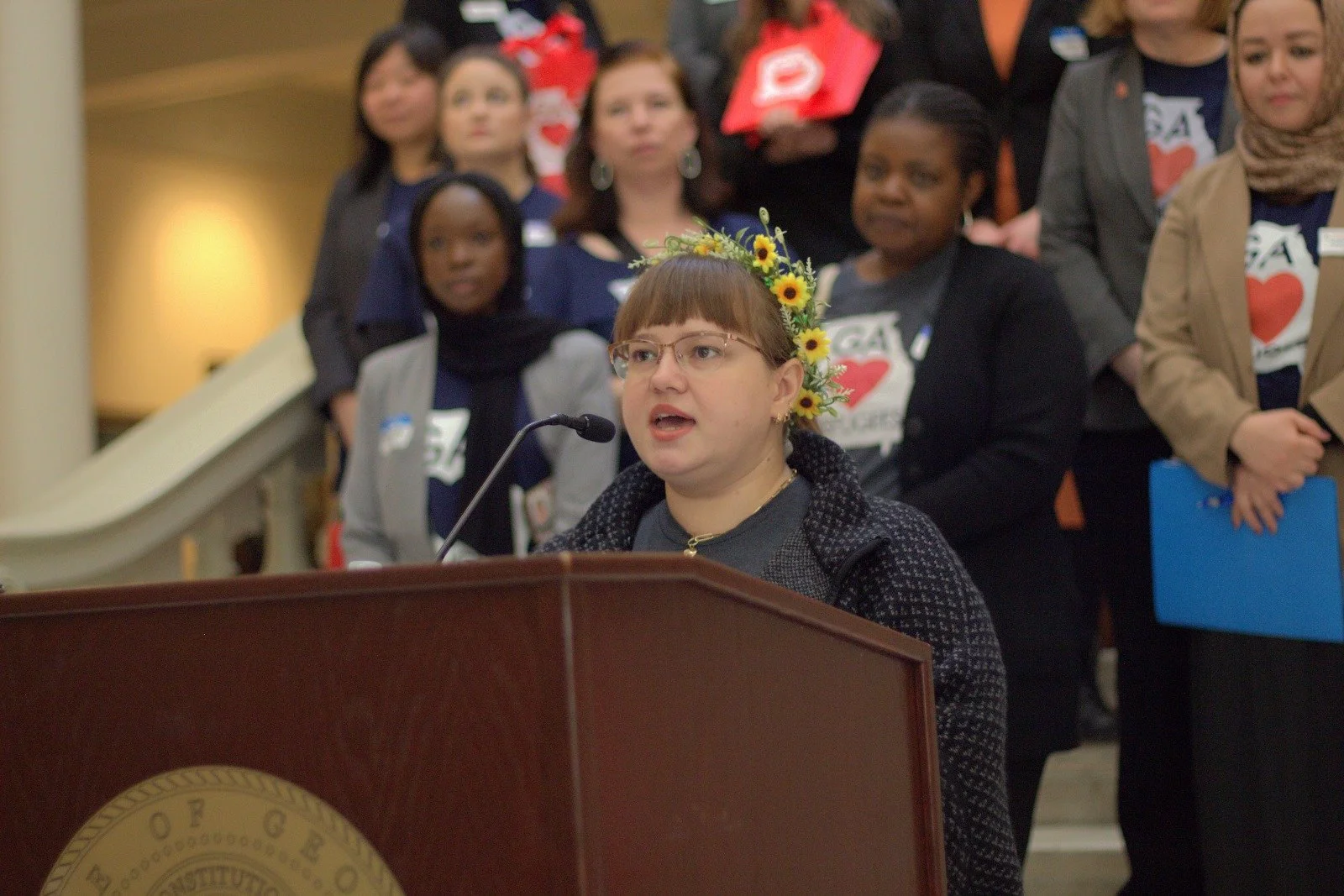
Her advocacy quickly expanded beyond the petition itself. She began collaborating with refugee organizations, participating in national roundtables, speaking publicly about immigration barriers, and helping refugees navigate bureaucratic systems she herself had once struggled to understand.
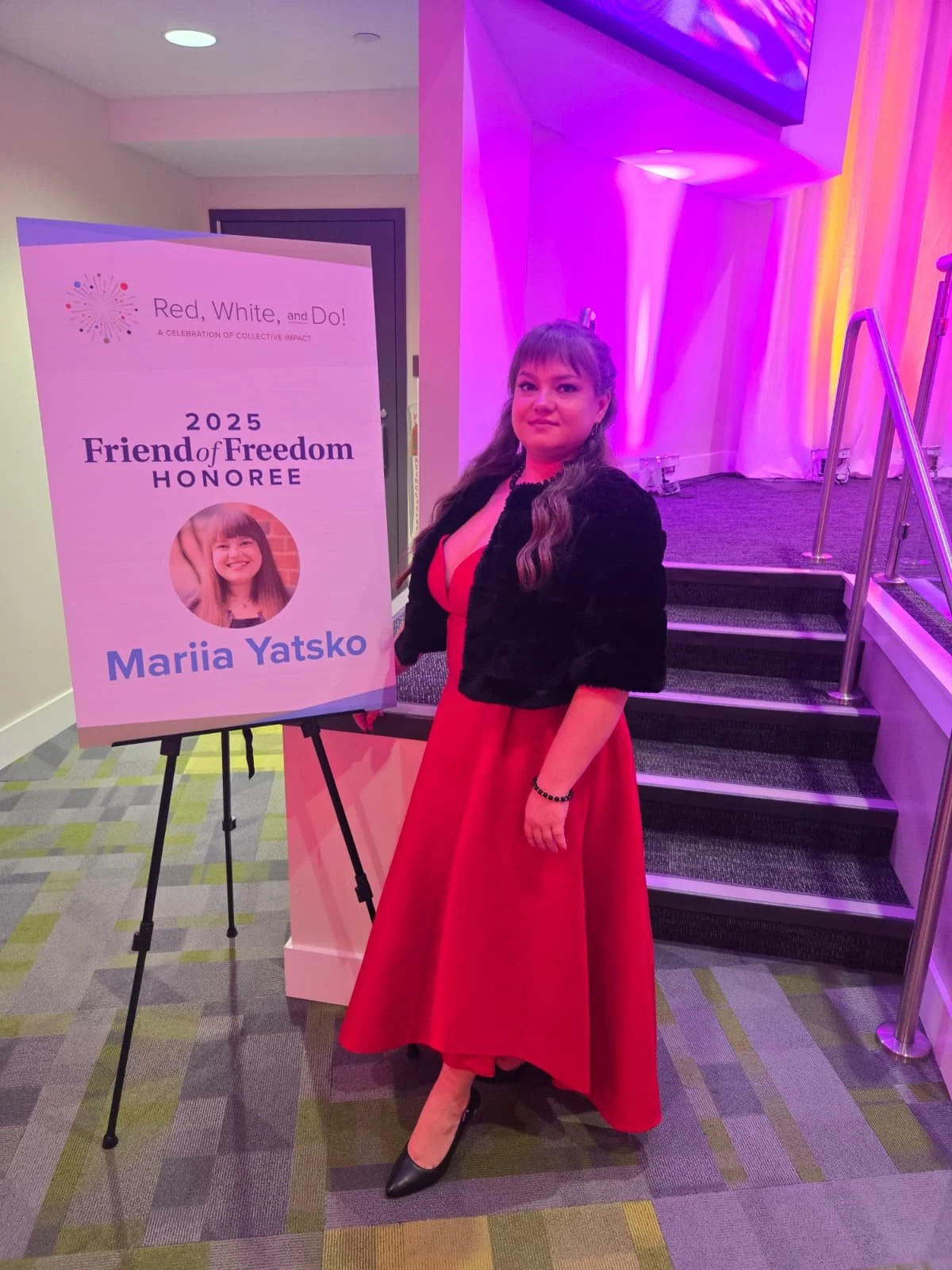
At one point, frustrated by immigration delays affecting parolees in Georgia, she discovered that congressional inquiries could help move stalled cases forward. Last year, Georgia recognized her work with a Friend of Freedom award for her human rights advocacy.
“I just see a problem and try to solve it,” she says. “I’m still fighting.”
Continuing to Fight
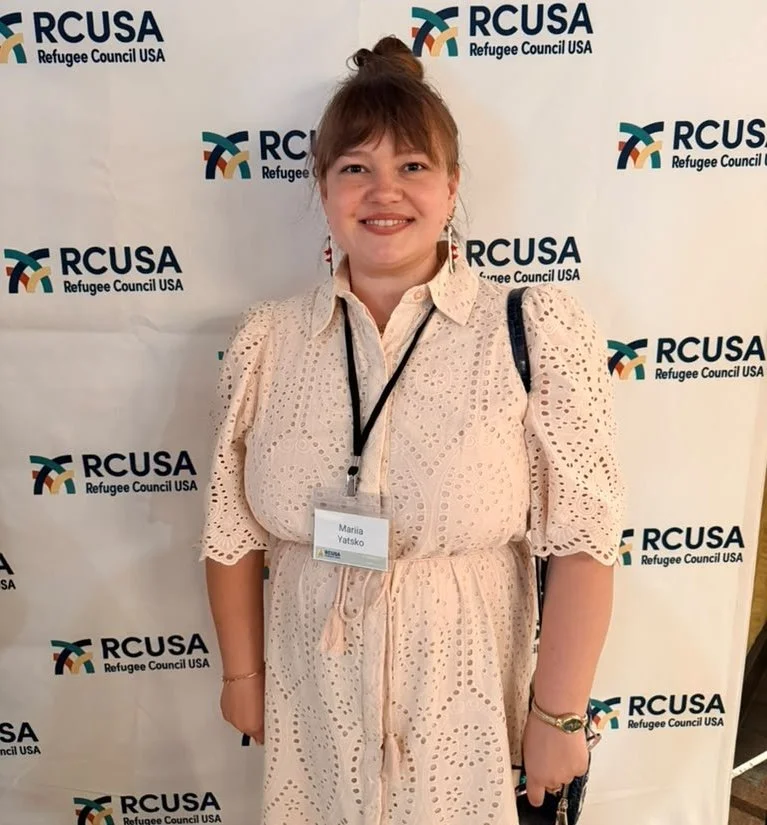
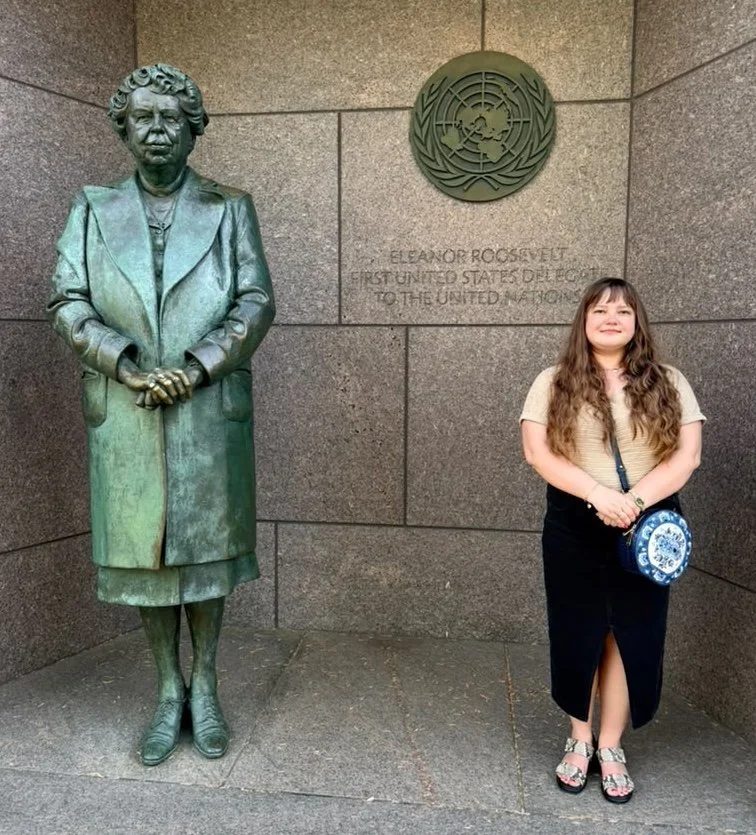
Today, Mariia works as an advocate, case specialist, and public speaker. She has appeared on television, participated in policy discussions in Washington, D.C., and continues helping refugees navigate systems she once had to decipher alone.
The war in Ukraine continues to dominate her emotional world. Her husband’s parents remain in Kharkiv, where attacks continue regularly. She worries Americans no longer fully understand the scale of what is happening.
“Every day people are dying in Kharkiv — every day,” she says. “American news is currently not showing what’s happening,” she says. “There are bombs and attacks that happen everyday, and no one knows about it.”
Despite everything, she continues to believe deeply in human connection.
“Because of my open heart,” she says, “because of the way I treat people, they treat me the same way.”
Near the end of the conversation, she shares one of the moments she is proudest of since arriving in the United States. Her son recently told her he knows what he wants to become.
“He told me he wants to become an advocate,” Mariia smiles when she tells the story. “He’s watching.”
For Mariia, that feels like proof that despite war, displacement, uncertainty, and loss, something enduring survived the journey with her: the belief that even after everything is taken away, a person can still choose to keep fighting — not only for themselves, but for others too.