
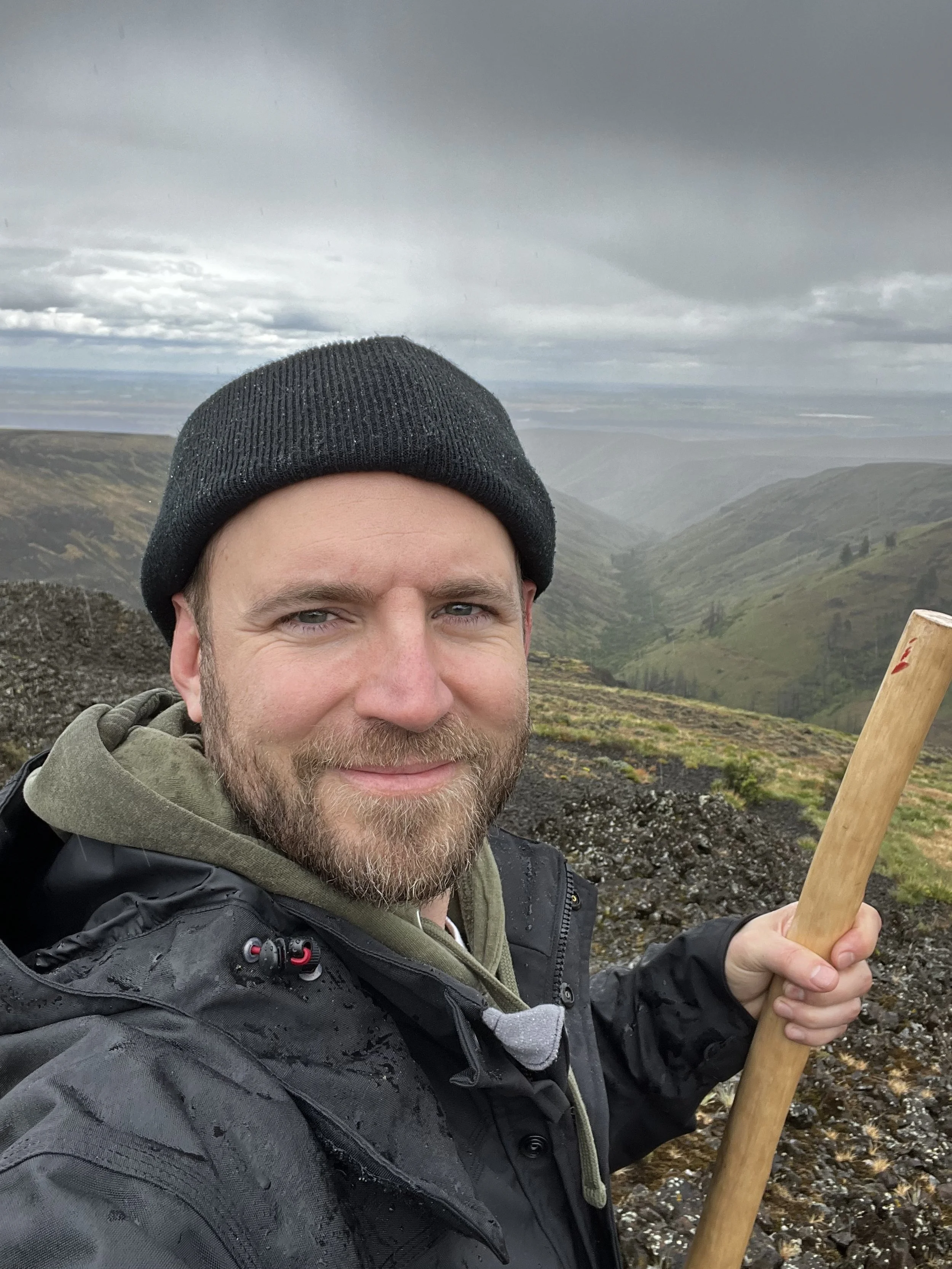
DONNY
Veteran | U.S. Army
“It was the constant split between being a human and being a weapon. ”
DONNY GREW UP INSIDE A CONTRADICTION.
“I was raised a very conservative Christian,” he says. “So I was told the military was like the devil’s arm. But I was also raised in American culture, where soldiers were heroes — the good guys — everything I was supposed to aspire to be.”
That tension stayed with him through adolescence — two opposing forces shaping one restless mind. In his first year of college 9/11 happened. College was expensive and he was struggling to find direction. The military became a way for him to meet his needs, and do something bigger. “I wanted to protect my friends and family, and to serve my country.”
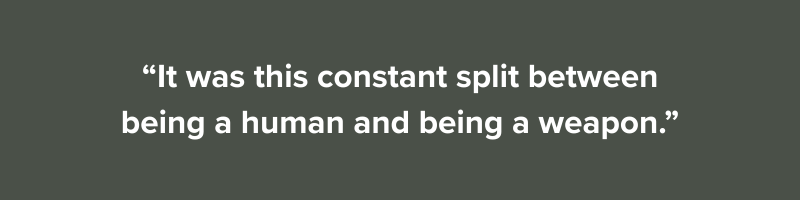
He enlisted in late 2001, believing he was joining “the protective good-guy arm in this good-and-evil story I was being told.” But that story began to unravel almost as soon as he arrived in Iraq. He remembers the moment the illusion cracked.
“I was sitting in a field where I’d been before,” he says. “A little hut, a family I knew, two little girls washing clothes in the river. And just upstream, a sewage truck was dumping waste into the same water. At that moment a big shift happened within me. What are we doing here?”
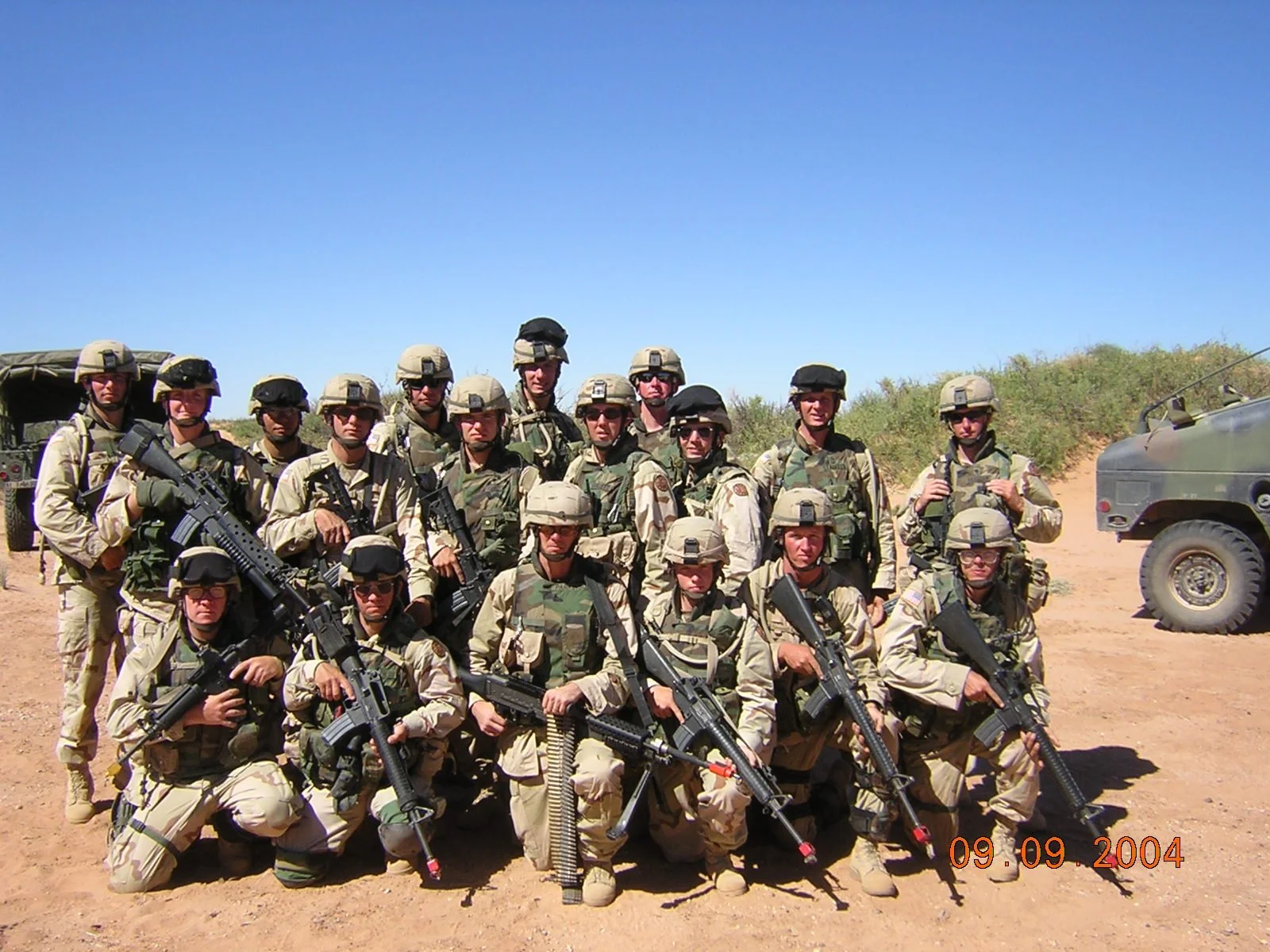
He felt incredibly conflicted. The contradictions kept multiplying. “We’d raid homes at three in the morning, terrorize people,” he says. “Then the next day we’d drive through the same neighborhoods, buy food from them, feed their kids, hand out school supplies — and on the way home, ram cars off the road because they weren’t moving fast enough. It was this constant split between being human and being a weapon.”
He spent much of his deployment in northern Iraq, a landscape that looked eerily familiar. “It looked like southern Idaho,” he says. “It was like being inside my own hometown, but surrounded by people who had a completely different story.”
At one police station where his unit trained local officers, he became close with the chief. “He loved me,” Donny says. “I was just this young kid. Two days before I left, he was killed by his own people.”
That loss stayed with him. “You start to hate everyone and also see their humanity at the same time,” he says. “You start asking — what would I do if this was happening in my town? If armed people showed up and said, ‘We’re going to do whatever we want’?”
He believes veterans and refugees have something essential to teach each other. “If a veteran had the chance to sit with a refugee, there’s potential for deep understanding,” he says. “To say: you’re valid. I love you. I’m sorry.”
Still, he’s careful about how those spaces are held. “There’s real risk,” he says. “There are veterans who can't yet hold the righteous rage of a refugee. That can hurt them — or set them back. So it has to be done with intention.”
Now, as a recovery mentor and guide, Donny helps others find their way back — teaching grounding, presence, and the slow work of becoming whole again.