
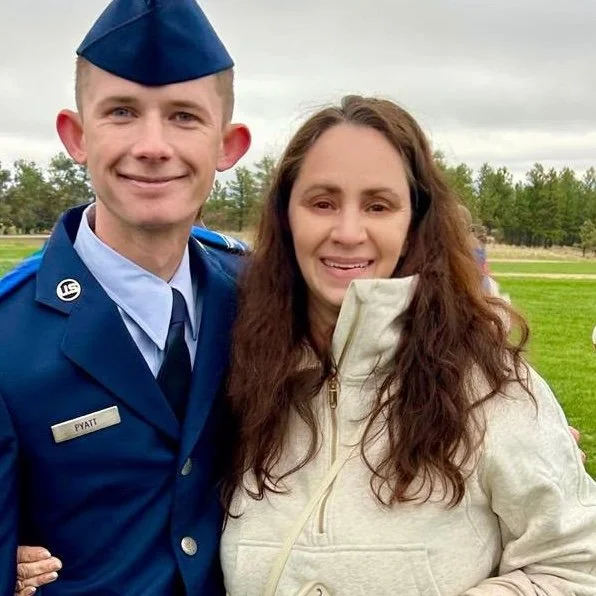
MARIALENA
Veteran | Iraq
“Trying to understand what motivates people in different cultures… where people are coming from. It helped me look through a different lens.”
“I HAVE LEGS. I HAVE ARMS. I’M WALKING.”
That’s what Marialena told the medics when they tried to lift her onto a stretcher.
She had been injured in an IED explosion. She was in pain, exhausted, and waiting to be evacuated out of Iraq.
But when she saw the others—the men already on stretchers, unconscious, missing limbs, hooked up to machines—she refused to be carried.
“I’m not getting on the plane like that,” she said.
She knew she was hurt—but not as hurt as the others. That was one of the most difficult things she would carry with her, not just in that moment, but long after she left the war behind.
Marialena grew up a latchkey kid in Baltimore, Maryland, in a household shaped by hard work and instability. Her father was a contractor who had been seriously injured more than once on the job. Her mother was an ER nurse who rarely seemed to stop moving. By the time the family lost their house and business, Marialena had already begun to internalize what others expected of her—that she might not amount to much.
“I wasn’t a great student,” she says. “I didn’t really know what I was going to do.”
At eighteen, her family moved to a small town in western North Carolina. Looking around, unsure of her next step, she made a decision that felt both sudden and inevitable.
At nineteen, she joined the Army and left for Fort Jackson, South Carolina — the same base where her father had reported for basic training in 1965, the year he was drafted. She loved the structure almost immediately. The routine gave her something she hadn’t realized she needed: clear expectations and a sense of direction. She made rank quickly.
Marialena chose water purification deliberately. “It was something real and something useful,” she explains. She wasn’t drawn to combat and wanted to contribute in a way that felt tangible.
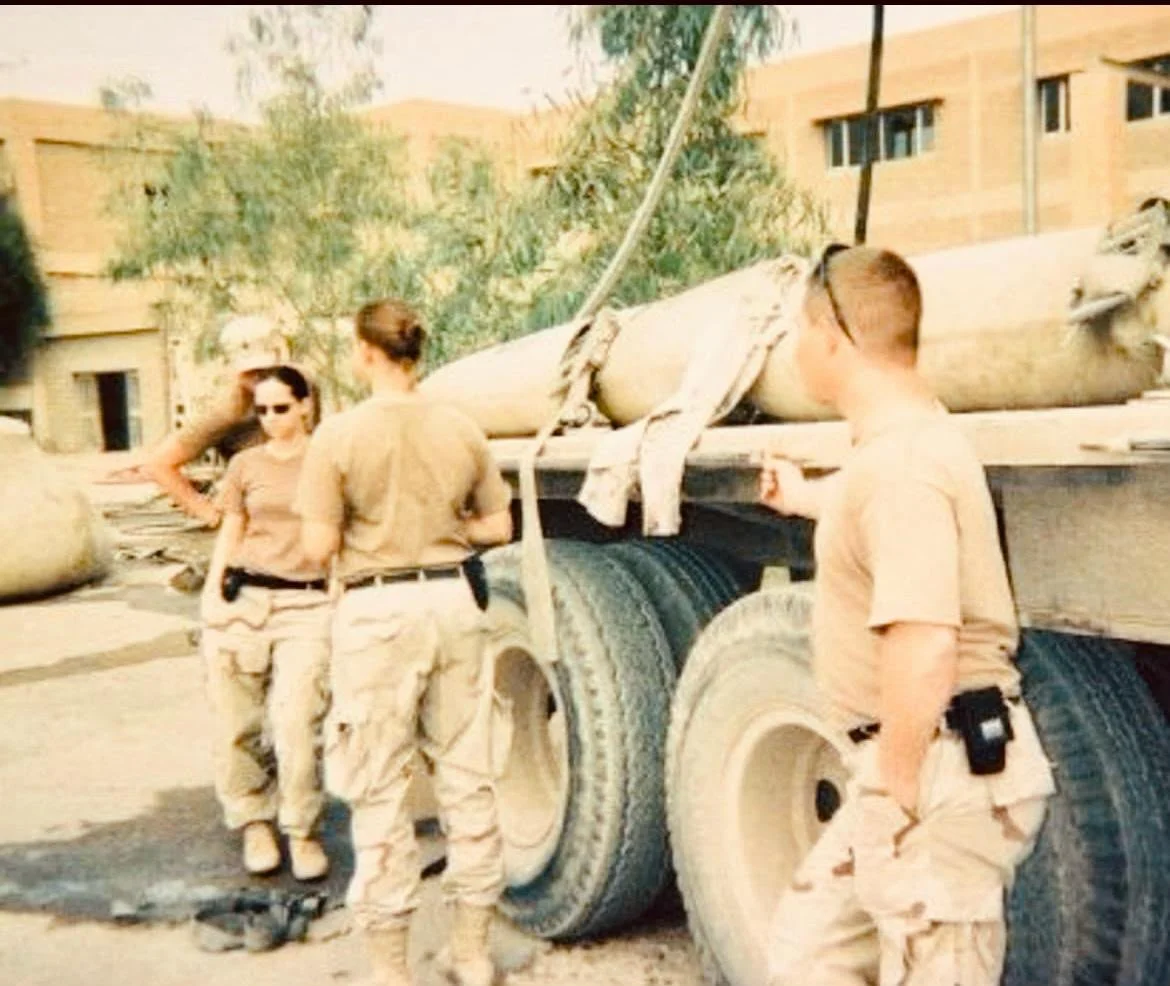
In 2003, she was deployed to Iraq.
On approach to Baghdad, the plane banked sharply to avoid a surface-to-air missile. On the ground, temperatures climbed past 130 degrees. Her job was to move non-potable water through the city—supporting troops and maintaining daily life.
She remembers the Iraqi workers they interacted with, the elders who would offer hookah and sweet black tea—so sugary it was almost candy. She gave them pre-packaged military meals in return. Much of the time, she says, she didn’t feel like she was witnessing war in the way she had expected.
“I mean, I didn’t always see the war,” she reflects. “I saw the aid…I saw something symbiotic.”
One memory, in particular, has never left her.
It was her birthday.
At a dinner hosted by the manager of the water treatment plant, his daughter, Fatima, who was about eight years old, came out to meet her. She had heard there was a female soldier on the base.
She brought Marialena a small teddy bear.
Through a translator, she explained it was a birthday gift, then asked if she could interview her for a school project. Fatima asked her questions about what it was like to be a woman in the military and about what her life was like.
“She was the most beautiful, sweetest little girl,” Marialena recalls. “I can picture her. I can see her.”
She pauses when she talks about her. “I wonder what happened to her,” she adds. “I pray every day that she went on to do amazing things.”
The teddy bear still sits in Marialena’s room today.
Not long after, everything changed.
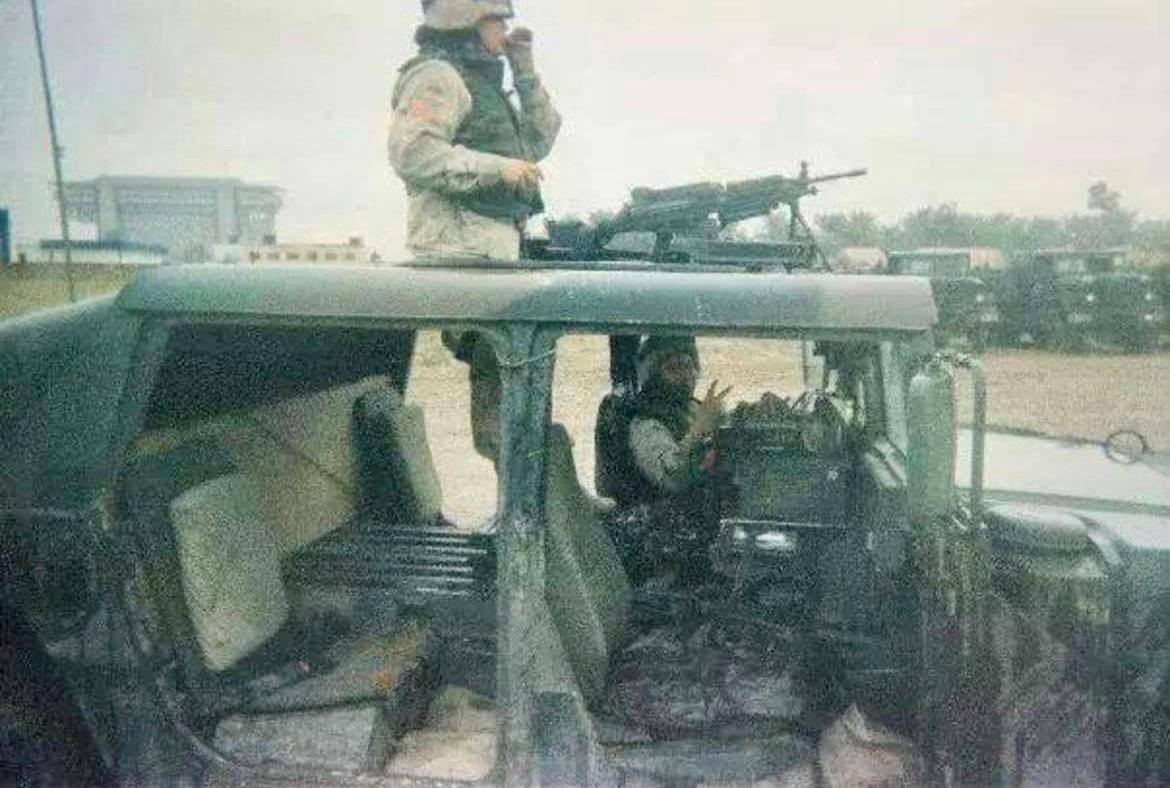
Marialena had run out of white socks and was heading out with a small convoy- two Humvees, no doors, sandbags lining the floor—to pick up a package from her mother. About a mile outside the perimeter, the explosion hit.
The blast had cracked the plates in her armor, driving them inward, breaking her ribs, and forcing her stomach upward into her chest.
It took three days before she was evacuated.
By then, she knew she was injured. But when she saw the others being loaded onto that plane, she also knew she was not the worst case there.
That was what stayed with her.
“I didn’t want to leave,” she says. “Everybody else was still there.”
Later, she would come to understand it differently.
“I think it was survivor’s guilt,” she reflects. “Like—I’m leaving, everybody else has to stay.”
The hardest part, in many ways, came after.
At Landstuhl, the military hospital in Germany, the system was overwhelmed. She spent a week in a tent outside waiting for surgery, through Christmas. Afterward, she was discharged quickly to make space for others and told to wait in the ER lobby until someone came for her.
No one did.
After ten hours, she went back to the desk and realized she had been forgotten.
Back at the base, it was nearly empty. Her unit was still deployed. She had no proper room, no heat, and little she could eat on a liquid diet. One day, trying to reach the commissary, she slipped on ice, tore open her stitches, and lay in a ditch for two hours before someone found her.
Her recovery stretched on for years—multiple surgeries, lasting nerve damage. In the end, her injuries brought her military career to a close.
Back in the US, Marialena built a life. She went to school, raised her son, and worked as a social worker. Over time, she began to approach people differently—to pause, to understand where they were coming from, and to resist quick judgment.
“Trying to understand what motivates people in different cultures… where people are coming from,” she explains. “It helped me look through a different lens.”
Yet, coming home brought its own type of dissonance.
There were the visible challenges—ongoing health issues and navigating a system that did not always seem built for someone like her.
"A VA doctor once told me — about my shoulder — he said: I don't know how to treat your kind. He meant: you have children, household duties. I was flabbergasted. Is this 1952?" she says.
Years later, she was diagnosed with breast cancer, which was another moment that forced her to confront the gaps in that same system. The VA, she notes, does not routinely provide mammograms, a reality that continues to shape how she thinks about the care available to women who have served. There were also other moments.
Like the day she parked in a veteran-designated space and was told she couldn’t be there unless her husband had served.
“I’m the veteran,” she told him. “Is it so weird that I’m a vet?”
Despite the challenges, Marialena found a community. A veterans’ group in North Carolina became a kind of anchor—a place where others understood the things that are hard to put into words.
“They’ve been my saving grace,” she says. “Having other people… we’ve gone through a lot together. They’ve gotten me through some really low points.”
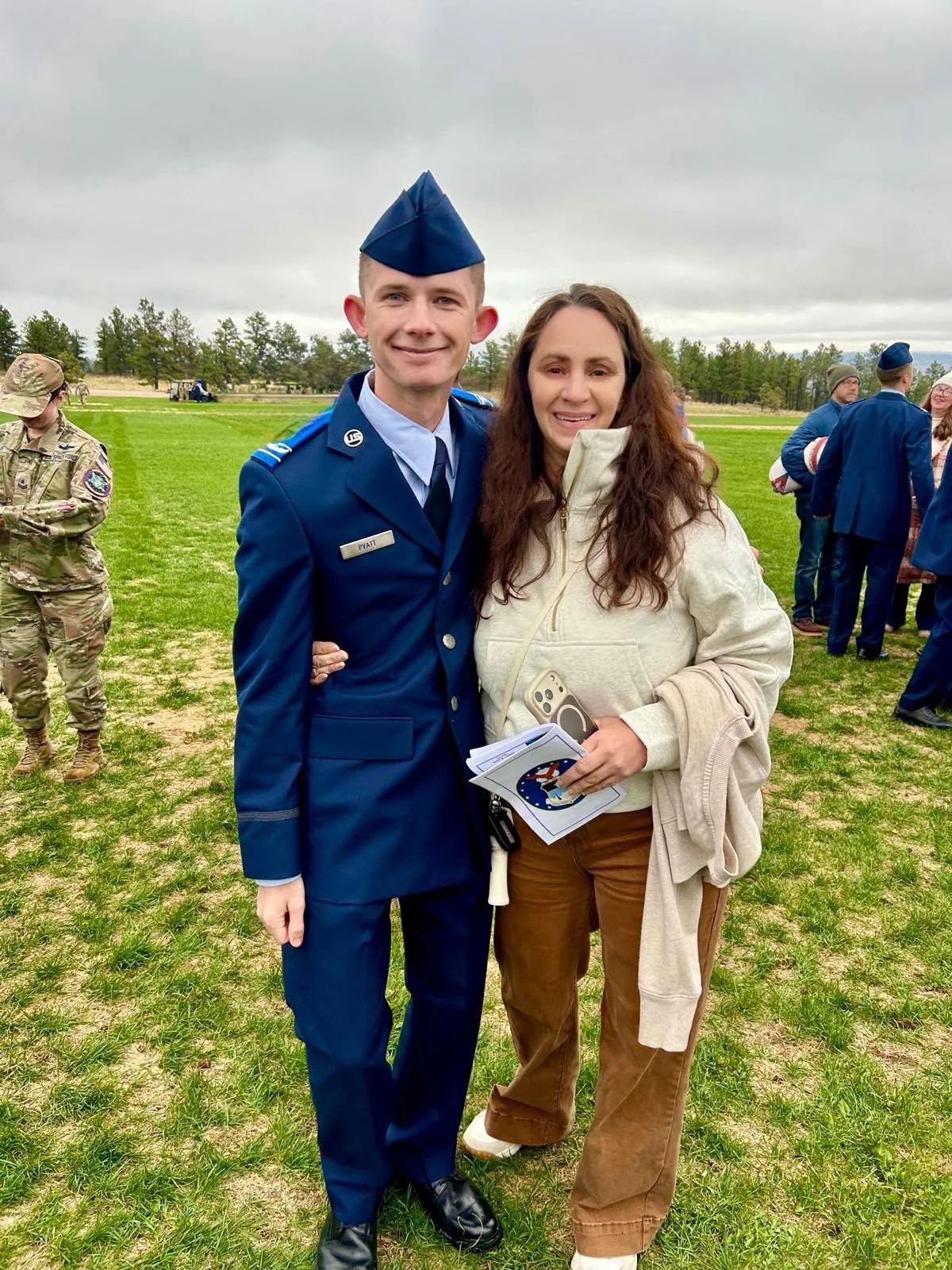
Now, her son is at the Air Force Academy, not far from Fort Carson, where her own military journey began. The symmetry is not lost on her. It’s something she is still, in her words, trying to make sense of.
Thinking back on her time in Iraq, she reflects on the relationships she built and the things she did not fully understand at the time.
“Even if you’re coming in to help, you’re still an invading force,” she says. “I just want to say—I’m sorry for what people had to live through. I’m sorry for the destruction, and I’m sorry if I ever looked at anyone with anything but humanity.”
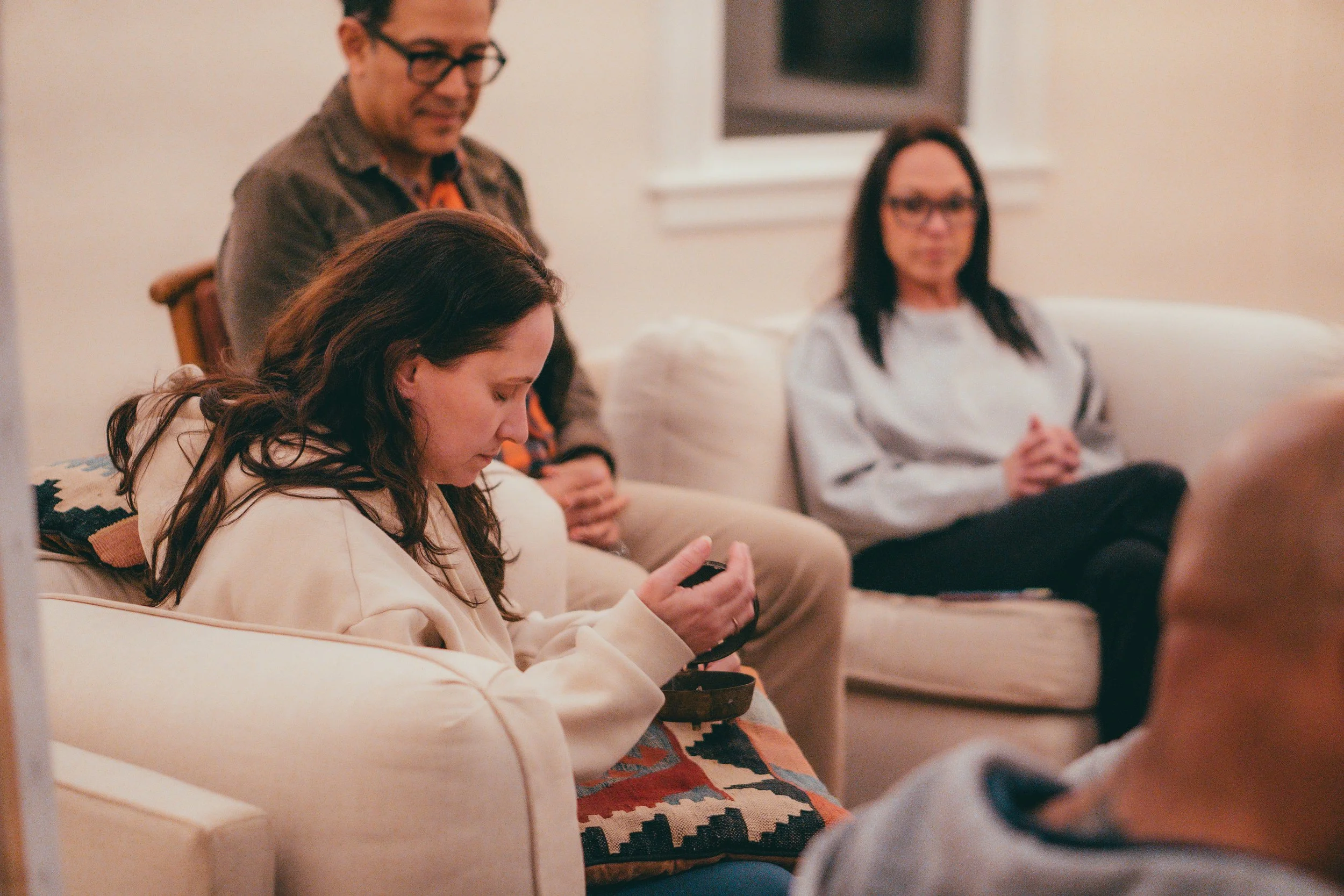
At a retreat that brought together both veterans and refugees, she sat alongside young Afghan and Iraqi women, who now call her their “American mom.”
Hearing their stories, she found herself thinking about how her military service was never really about presidents or generals or politics, but about people—the ones beside her, and the ones whose lives were shaped by the same war.