

ABBAS
Syria
“I do not want to be a fleeting headline.”
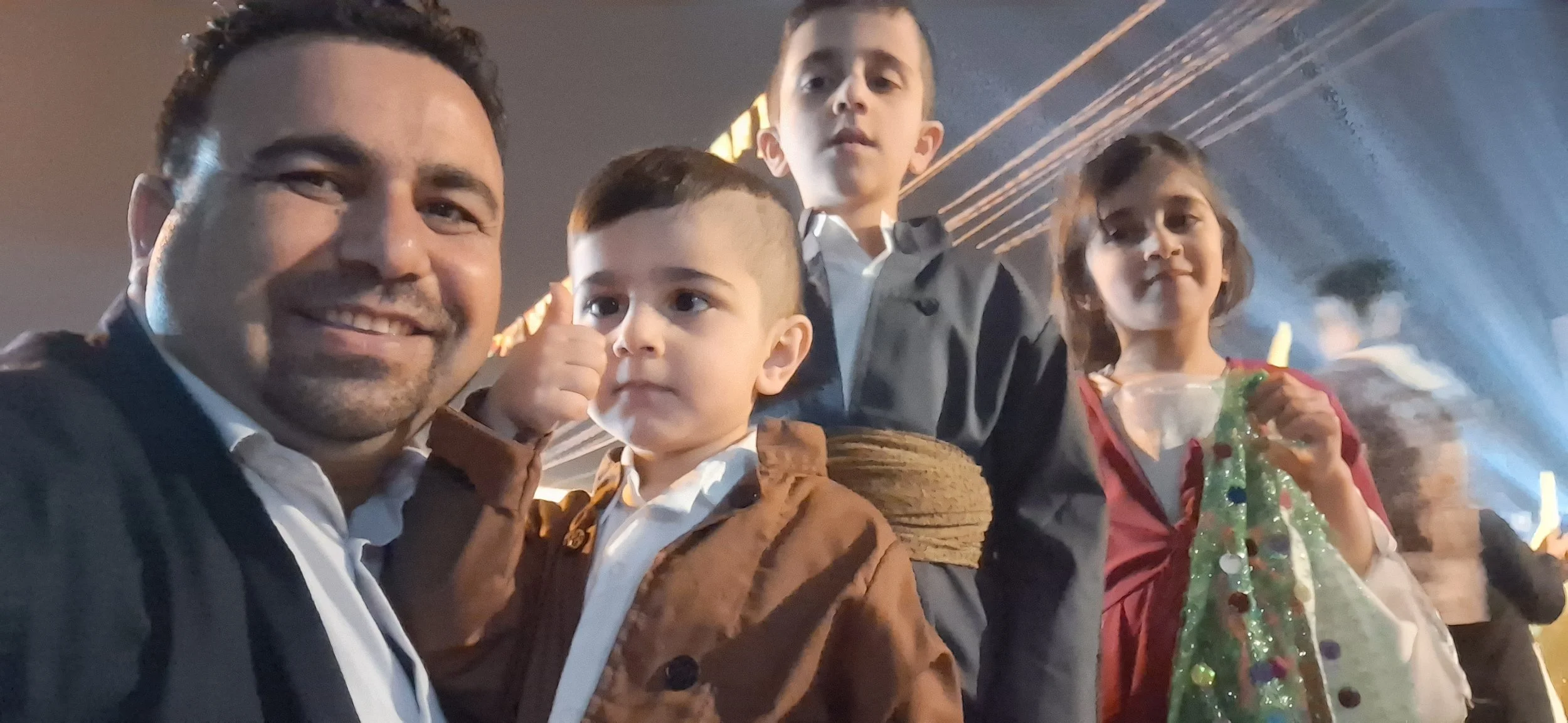
4:30 IN THE MORNING. ABBAS WALKS THE STREETS OF QAMISHL, SYRIA. THE CITY IS AWAKE WITH HIM.
When whispers of war are all around, sleep becomes a luxury few can afford.
Through half-open windows, Abbas sees his neighbors: exhausted faces, watchful eyes. Children rocked in darkened rooms, as if an embrace might stop a bullet.
It is then, when fear makes sleep feel irresponsible, that Abbas writes to me.
“I write to you because I do not want this to be a fleeting headline.”
This is what it looks like when fear is real, and a person will not go silent.
Abbas was born in a small village near Qamishli, Syria. His childhood is a blur but early on, he sensed invisible structures being built around him. Quiet borders that shaped where he could go, what he could say, who he could be.
Those borders hardened into walls when he entered an Islamic Sharia boarding school, where he would spend eight years. The rules were clear. The structures rigid. The expectations fixed.
It was there that Abbas made a choice that did not quite fit. He began to write.
At first, simple attempts, mostly short stories. A private way of choosing something different inside a place that did not offer choices. He drew from what surrounded him: religion, language, identity. When opportunity appeared, he studied Arabic literature too.
As his inner world expanded, the physical world outside tightened. Abbas is Kurdish. In Syria, Kurdish language and culture were treated as dangerous. Abbas saw friends and cultural activists disappear simply for publishing in Kurdish, teaching it, or promoting it.
Still, he kept writing.

In 2013, in the thick of the Syrian civil war, Abbas was living in a Kurdish neighborhood in Damascus. There, he began working in secret with a Kurdish journalism channel based in Iraqi Kurdistan. Two years of underground reporting inside the capital, where this kind of work could cost everything.
From that period, one memory stays with him: Abbas and a friend were publishing a Kurdish brochure in Damascus, banned by the state, titled Al Fajr. It was not something you displayed openly. It was the kind of thing you hid if a stranger came too close.and they were postering them late at night
An elderly man stepped in front of them. For a moment, Abbas thought they were caught. But They did not run. They did not hide the brochures. They handed him one.
The man looked at it. Smiled and walked on.
In that smile were years of wisdom, knowledge, experience that belied the fear that Abbas and his friend felt. Regimes come and go. Courage stays.
Years later, when people speak of “presence” and “withdrawal” and “boots on the ground” as if they are neutral terms, Abbas describes something more intimate: the feeling of living beneath decisions made far away.
Turkish forces attacked Ras al-Ayn, a city with a large Kurdish population. Abbas recalls Donald Trump ordering U.S. forces to withdraw from the area. The invasion followed. The city was taken.
The lesson was simple: any safety could vanish overnight. Borders shift. Promises collapse.
Abbas describes the U.S. presence before that as a kind of ghost, barely visible, not doing much, but still there. Still dependable. Still present.
Still, Abbas recalls a belief prevalent among the Kurds in the north east. Salvation might still come from the U.S. They recall what the U.S did for the Kurds in Iraq, after the fall of Saddam Hussein. A collective hope that something like that might happen to the Kurds in the region.
But hope, Abbas says, does not always survive contact with reality.
Back in Qamishli, at 4:30 a.m., the city does not sleep—not from celebration, but from proximity to disaster.
Abbas’s email shifts into fragments:
Human dignity violated.
Civilian facilities targeted.
Bodies desecrated.
Tensions rising.
Homes broken into for baseless arrests.
Forces withdraw under agreements that promise return, while reality drifts further from what was promised. Pressure escalates. Attempts to enter Kurdish-majority areas revive memories of the worst war years, “a time when a person’s very existence can become a target.”
When Abbas speaks of betrayal or abandonment, he is not asking for miracles. He is naming the bitterness of standing beside the world in the fight against داعش (ISIS), and then watching the world step back.
More than fifteen thousand were lost. Some lives, he has learned, weigh almost nothing in the calculations of nations.
The line that breaks him, though, is not geopolitical. It is domestic.
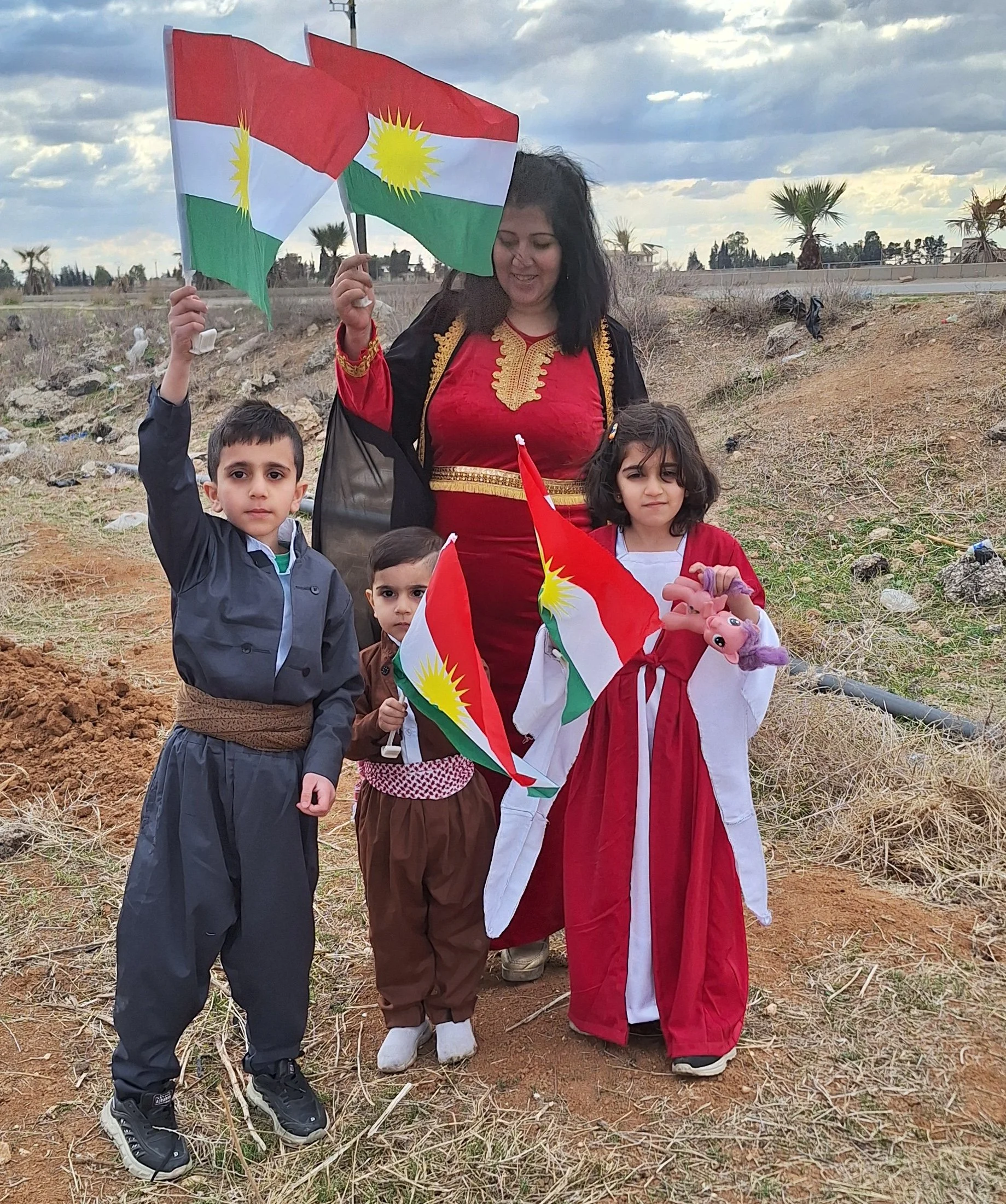
His daughter is almost seven. Her name is Ilon, a Kurdish name meaning the month of September.
A few days ago, she tugged at his shirt. “Dad, let’s go to Hasakah. I want to visit my aunts and grandfather.” They tell her the situation is difficult. That war may be coming. Ilon was born during war, so the word is familiar. But its full meaning has not yet settled in.
She asks, “Why is there this war? And how long will it last? Because of it, we cannot go to Hasakah.”
Abbas hides his fear. Not because it isn’t there, but because he does not know how to explain to a child that when adults make decisions, children are often the ones who pay.
Abbas wants to make sure what is happening does not get filed away as a sidenote.
He wants the story to be seen for what it is: The lives of people “suffocating between agreements that are not respected and a silence that saves no one.”
Beneath everything, the boarding school, the first stories, the secret journalism, the banned brochure, the old man’s smile, there is the same insistence:
He wants the humanitarian reality of the Kurdish experience in Syria to be heard beyond Syria.
He wants the voice to go further. He wants the stories to travel.
And even now, in the hour before dawn, Abbas writes not to persuade, not to argue, but to be heard.
To be known.
“To not be a fleeting headline.”
“With my affection and respect, Abbas.”